

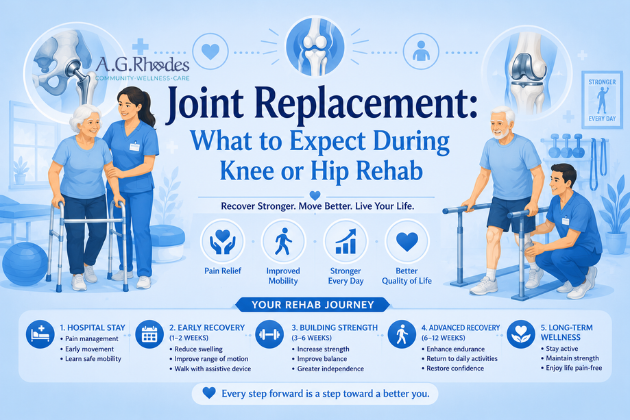
 Recovering from a knee or hip replacement requires a structured rehabilitation plan focused on restoring mobility, strength, balance, and independence. A personalized rehabilitation program, guided by skilled therapists, helps reduce complications, improve long-term function, and support a safe return to everyday activities.
After a joint replacement, knee or hip rehab typically begins within 24 hours of surgery and continues for several weeks or months depending on your overall health and recovery goals. Rehabilitation includes pain management, physical therapy, strength training, mobility exercises, and education to help you regain independence safely and confidently.
Why Rehabilitation Matters After Joint Replacement
Whether you’ve undergone a total knee replacement or total hip replacement, surgery is only one part of your recovery journey. Rehabilitation plays a critical role in helping your new joint function properly while minimizing pain, stiffness, and future complications.
Without consistent rehabilitation, patients may experience the following:
- Limited range of motion
- Muscle weakness
- Poor balance
- Increased fall risk
- Delayed recovery
- Reduced quality of life
A comprehensive rehabilitation program helps restore confidence while improving your ability to perform daily activities like walking, climbing stairs, dressing, and bathing.
What Happens During Knee or Hip Rehab
Recovery follows several stages, although every patient’s timeline varies based on age, overall health, and surgical complexity.
Phase 1: Early Recovery (Days 1–7)
Most patients begin moving within the first day after surgery.
Primary goals include:
- Controlling pain and swelling
- Preventing blood clots
- Standing safely
- Walking with assistance
- Learning proper movement techniques
- Beginning gentle range-of-motion exercises
Physical therapists also teach patients how to safely:
- Get in and out of bed
- Use walkers or canes
- Navigate stairs
- Sit and stand correctly
Early movement significantly reduces complications and promotes healing.
Phase 2: Building Strength (Weeks 2–6)
As healing progresses, rehabilitation becomes more active.
Therapy often includes:
- Strengthening surrounding muscles
- Improving flexibility
- Balance training
- Walking longer distances
- Functional mobility exercises
- Endurance building
Exercises may target:
- Quadriceps
- Hamstrings
- Hip abductors
- Gluteal muscles
- Core stability
Improving muscle strength helps reduce stress placed on the new joint.
Phase 3: Returning to Everyday Life (Weeks 6–12+)
The focus shifts toward restoring independence.
Patients continue working on:
- Walking without assistive devices
- Climbing stairs
- Household activities
- Community mobility
- Recreational activities
- Safe exercise routines
Many individuals return to normal daily activities within three months, although full recovery may continue for up to one year.
What Makes Rehabilitation Successful?
Several factors influence recovery outcomes.
Consistency
Performing prescribed exercises regularly is one of the strongest predictors of successful rehabilitation.
Personalized Treatment
Every patient heals differently.
An individualized therapy program considers:
- Surgical procedure
- Medical history
- Current mobility
- Pain levels
- Personal goals
- Home environment
Pain Management
Pain should be controlled—not ignored.
Rehabilitation teams may recommend:
- Medication management
- Ice therapy
- Positioning techniques
- Gentle stretching
- Activity modification
Managing discomfort allows patients to participate more effectively in therapy.
Multidisciplinary Care
Optimal recovery often involves collaboration among:
- Physicians
- Physical therapists
- Occupational therapists
- Nurses
- Rehabilitation specialists
- Care coordinators
This team approach improves communication and continuity of care.
Recovery Timeline After Joint Replacement
| Recovery Stage | Typical Goals | Expected Progress |
| Days 1–7 | Begin walking, pain control, mobility | Stand and walk with assistance |
| Weeks 2–6 | Build strength and flexibility | Greater independence with walking |
| Weeks 6–12 | Improve endurance and daily function | Return to many normal activities |
| 3–12 Months | Long-term recovery | Improved strength, balance, and confidence |
Common Challenges During Recovery
Recovery is rarely perfectly linear.
Patients may experience:
- Temporary swelling
- Fatigue
- Muscle soreness
- Sleep disturbances
- Emotional frustration
- Fear of falling
These challenges are common and often improve with continued rehabilitation, proper medical guidance, and realistic expectations.
One frequently overlooked factor is mental resilience. Patients who understand recovery milestones and maintain realistic expectations often remain more engaged throughout therapy, leading to better long-term outcomes.
Tips for a Faster, Safer Recovery
To maximize recovery after joint replacement:
- Follow your therapy schedule consistently.
- Stay active without overexerting yourself.
- Complete your home exercise program.
- Eat a protein-rich, nutrient-dense diet.
- Stay hydrated.
- Prevent falls by removing home hazards.
- Wear supportive footwear.
- Attend all follow-up appointments.
- Report unusual pain, redness, or swelling promptly.
Small daily improvements often lead to significant long-term gains.
Why Skilled Rehabilitation Matters
Choosing a rehabilitation provider with experience in orthopedic recovery can significantly influence outcomes.
An experienced rehabilitation team can help patients:
- Recover mobility more efficiently
- Improve balance and coordination
- Reduce hospital readmissions
- Prevent avoidable complications
- Increase confidence during recovery
- Return to favorite activities sooner
Professional rehabilitation also ensures exercises are performed safely while progressing appropriately as healing continues.
Why Choose A.G. Rhodes for Joint Replacement Recovery?
At A.G. Rhodes, rehabilitation is centered around each patient’s individual recovery goals.
Patients benefit from:
- Personalized rehabilitation plans
- Experienced physical and occupational therapists
- Evidence-based recovery techniques
- Compassionate interdisciplinary care
- Comfortable healing environments
- Ongoing family education and support
- A focus on restoring independence and quality of life
Whether recovering from knee replacement or hip replacement surgery, A.G. Rhodes provides the clinical expertise and supportive environment needed for successful rehabilitation.
Take the Next Step Toward Recovery
Joint replacement is the beginning of a healthier, more active future—but rehabilitation determines how successfully you reach your goals.
If you or a loved one is preparing for surgery or needs post-operative rehabilitation, A.G. Rhodes offers compassionate, individualized care designed to help patients regain strength, mobility, and confidence.
Contact A.G. Rhodes today to learn more about its orthopedic rehabilitation services and discover how expert care can support a safer, stronger recovery.
Frequently Asked Questions
What is the goal of knee or hip rehabilitation?
The goal is to restore strength, mobility, independence, and safe movement while reducing pain and preventing complications.
How long does knee or hip rehab usually take?
Most patients make significant progress within 6–12 weeks, although full recovery may continue for up to one year.
Can rehabilitation reduce pain after joint replacement?
Yes. Guided exercises, strengthening, and proper movement techniques often reduce pain and improve long-term joint function.
Is physical therapy necessary after joint replacement?
Yes. Physical therapy is considered one of the most important components of recovery following knee or hip replacement surgery.
When should rehabilitation begin after surgery?
Most patients begin rehabilitation within 24 hours after surgery unless their surgeon recommends otherwise.