

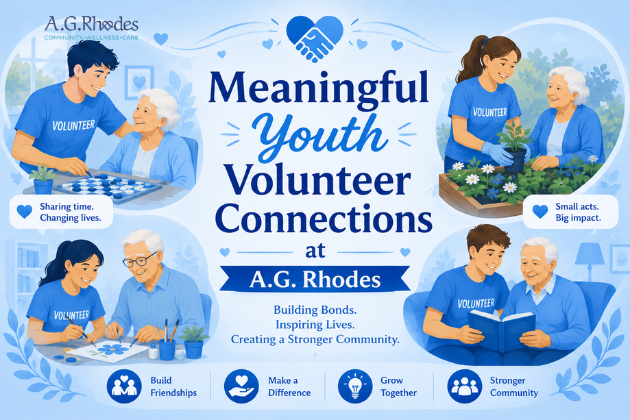
 Youth volunteers play an important role in enriching the lives of older adults by fostering meaningful relationships, reducing social isolation, and creating joyful shared experiences. Volunteers at A.G. Rhodes help build stronger intergenerational connections while gaining empathy, leadership skills, and a deeper appreciation for aging, creating lasting benefits for both generations.
Intergenerational Joy: The Impact of Volunteers at A.G. Rhodes
Intergenerational volunteer programs bring together younger and older generations to create meaningful relationships that benefit everyone involved. At A.G. Rhodes, youth volunteers help enhance residents’ emotional well-being through companionship, activities, and shared experiences while developing compassion, communication skills, and a stronger sense of community responsibility.
Why Intergenerational Connections Matter
As America’s older adult population continues to grow, addressing loneliness and social isolation has become increasingly important. Research consistently shows that meaningful social engagement contributes to better emotional health, cognitive stimulation, and overall quality of life for seniors.
Intergenerational volunteer programs bridge the age gap by creating opportunities where younger people and older adults learn from one another. These relationships extend beyond simple volunteer service—they become genuine friendships built on mutual respect and shared experiences.
For healthcare communities like A.G. Rhodes, youth volunteers contribute to a warm, vibrant environment where every interaction supports person-centered care.
Benefits for Older Adults
Youth volunteers offer more than assistance; they provide fresh energy and authentic companionship.
Residents often benefit from:
- Increased social interaction
- Reduced feelings of loneliness
- Improved emotional well-being
- Greater participation in recreational activities
- Opportunities to share life experiences and wisdom
- Enhanced cognitive engagement through conversation and games
- Stronger sense of purpose and belonging
Even simple interactions such as reading together, playing cards, gardening, or celebrating holidays can create lasting positive memories.
How Volunteers at A.G. Rhodes Make a Difference
The work performed by volunteers at A.G. Rhodes supports the organization’s mission of delivering exceptional care while enriching residents’ daily lives.
Youth volunteers may participate in activities such as:
- Assisting with arts and crafts
- Reading books or newspapers
- Playing music or singing
- Helping during seasonal celebrations
- Supporting recreational events
- Walking with residents outdoors
- Participating in games and social activities
- Providing friendly conversation and companionship
Rather than replacing professional caregivers, volunteers complement clinical care by adding valuable social and emotional support that enhances residents’ overall experience.
This collaborative approach reflects modern senior care practices that recognize emotional wellness as an essential component of healthy aging.
The Lasting Benefits for Youth Volunteers
While residents receive companionship, young volunteers gain equally valuable life experiences.
Participating in volunteer programs helps young people develop:
Communication Skills
Interacting with older adults strengthens active listening, patience, and thoughtful conversation.
Empathy and Emotional Intelligence
Learning about residents’ life stories encourages greater compassion and understanding across generations.
Leadership Development
Volunteers become more confident by assisting with group activities, events, and community engagement.
Career Exploration
Many students interested in healthcare, nursing, social work, occupational therapy, or gerontology gain firsthand experience working in a senior living environment.
Community Engagement
Volunteerism encourages civic responsibility and reinforces the value of giving back to local communities.
These experiences often leave lasting impressions that influence future educational and career choices.
Beyond Activities: Building Genuine Relationships
One of the greatest strengths of intergenerational volunteering is the development of authentic relationships.
Residents share:
- Historical perspectives
- Career experiences
- Family traditions
- Personal achievements
- Life lessons
Meanwhile, younger volunteers introduce:
- New hobbies
- Technology assistance
- Creative ideas
- Music and cultural interests
- Fresh perspectives
These reciprocal exchanges create meaningful conversations where both generations learn from one another.
Unlike structured therapy sessions, casual social interactions often feel more natural and enjoyable, encouraging stronger emotional connections.
Comparing the Benefits of Intergenerational Volunteer Programs
| Benefits for Residents | Benefits for Youth Volunteers |
| Reduced loneliness | Improved communication skills |
| Emotional support | Greater empathy |
| Cognitive engagement | Leadership development |
| Increased social interaction | Healthcare career exposure |
| Higher participation in activities | Community involvement |
| Sense of belonging | Personal growth |
| Joyful companionship | Appreciation for older generations |
What Makes A.G. Rhodes’ Volunteer Experience Unique?
Successful volunteer programs focus on creating meaningful interactions rather than simply completing tasks.
Key characteristics include:
- Person-centered engagement
- Safe, supervised volunteer opportunities
- Activities tailored to residents’ interests
- Opportunities for long-term relationships
- Collaboration with care teams
- Community-focused mission
This approach allows every volunteer interaction to contribute positively to residents’ physical, emotional, and social well-being.
The result is a culture where compassionate care extends beyond medical support into everyday human connection.
Best Practices for Successful Youth Volunteering
Organizations that build strong intergenerational programs often emphasize:
Orientation and Training
Volunteers receive guidance on communicating respectfully with older adults and understanding age-related changes.
Consistency
Regular visits help establish trust and familiarity between volunteers and residents.
Meaningful Activities
Programs encourage interactive experiences rather than passive observation.
Mutual Learning
Both generations are encouraged to share stories, interests, and experiences.
Reflection
Youth volunteers benefit from reflecting on what they learn, reinforcing empathy and personal growth.
These practices help maximize positive outcomes for everyone involved.
The Future of Intergenerational Care
As senior care continues evolving, intergenerational engagement is becoming an increasingly valuable component of holistic wellness.
Communities that welcome youth volunteers often experience:
- Stronger community partnerships
- Increased resident engagement
- More vibrant social programming
- Enhanced quality of life
- Greater public awareness about aging
Programs like those at A.G. Rhodes demonstrate that meaningful human connection remains one of the most powerful forms of care.
By investing in future generations while honoring older adults, intergenerational volunteer programs strengthen entire communities.
Become Part of the A.G. Rhodes Community
Making a difference starts with a single conversation.
Whether you’re a student seeking volunteer experience, a family looking to give back together, or a community member interested in supporting older adults, volunteering at A.G. Rhodes offers an opportunity to create meaningful relationships that enrich lives.
Ready to make an impact?
- Explore volunteer opportunities at A.G. Rhodes.
- Learn how your time and talents can brighten a resident’s day.
- Join a community committed to compassionate, person-centered care.
- Help build stronger connections across generations.
Every visit has the potential to create joy—for residents, volunteers, and families alike.
Interested in volunteering at A.G. Rhodes?
Click here to learn more about our volunteer opportunities, requirements, and application process.
Frequently Asked Questions
What do youth volunteers do at A.G. Rhodes?
Youth volunteers assist with recreational activities, companionship, conversations, events, and social engagement that enhance residents’ daily lives.
They provide companionship and help facilitate meaningful activities that improve residents’ quality of life.
What are the benefits of intergenerational volunteering?
Intergenerational volunteering improves emotional well-being for seniors while helping young people develop empathy, communication skills, and leadership.
Both generations benefit through meaningful relationships, shared learning, and stronger community connections.
Who can become a volunteer at A.G. Rhodes?
Volunteer opportunities are typically available for students, individuals, families, and community groups who meet program requirements.
Eligible individuals of various ages can apply according to A.G. Rhodes’ volunteer guidelines.
Why is companionship important for older adults?
Regular social interaction helps reduce loneliness, encourages cognitive engagement, and supports emotional wellness.
Companionship contributes to healthier aging by improving emotional and social well-being.
How do volunteers support person-centered care?
Volunteers complement professional caregivers by providing individualized attention and meaningful social interaction.
They enhance residents’ overall experience through compassionate engagement beyond clinical care.