
A Force of Nature: The Enduring Legacy of Margaret Boyd Perdue
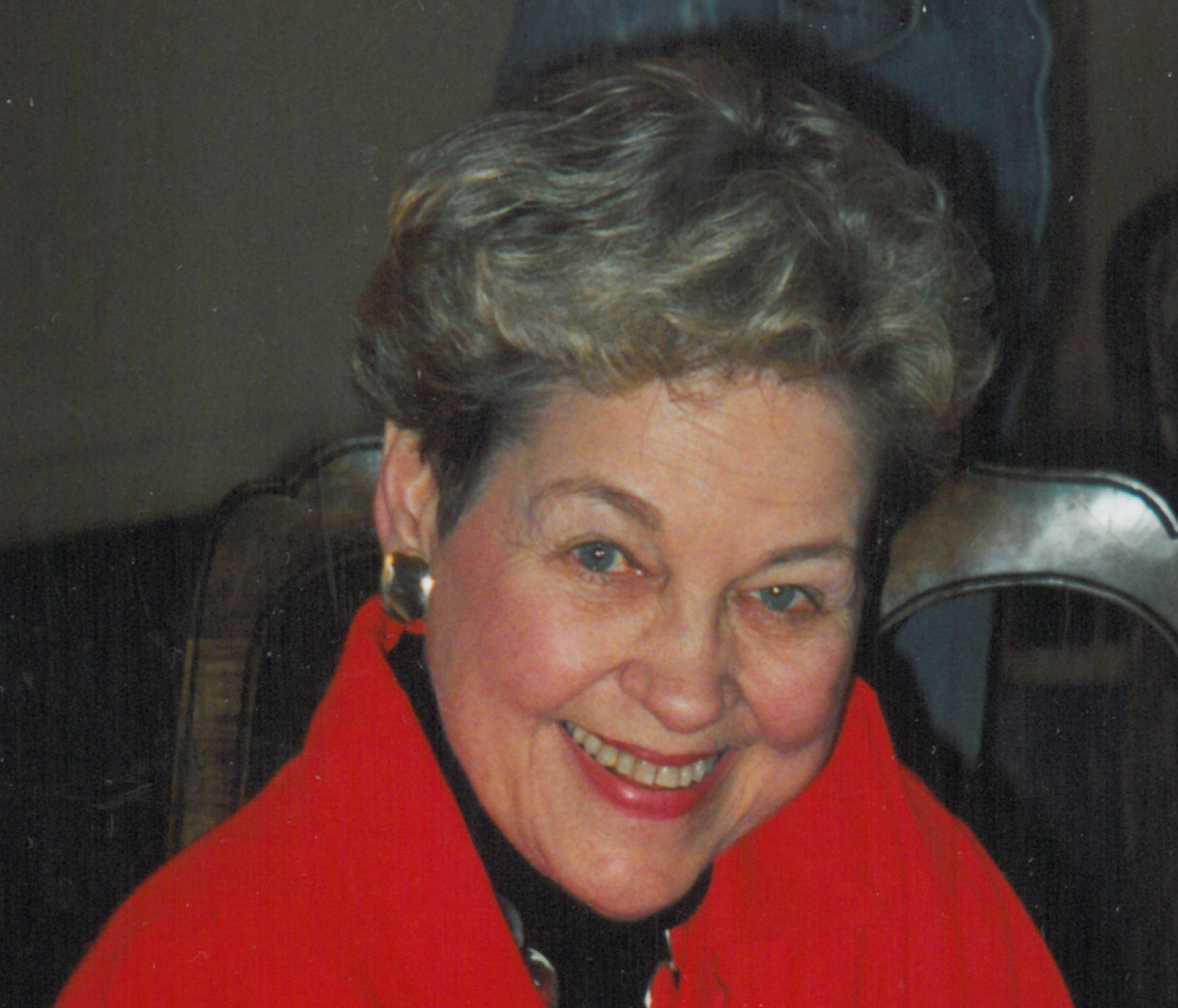
The late Margaret Boyd Perdue was not the kind of leader who sought recognition. She preferred to shape outcomes behind the scenes — influencing strategy, building momentum, and drawing others into service. Those who worked alongside her remember a woman whose impact was great, even when her approach was understated.
Her children, David Perdue, chair of the A.G. Rhodes Board of Trustees, and Margaret Perdue Denny, A.G. Rhodes board member, describe her as “a force of nature.”
That force was not loud or self-promoting. Instead, it showed up in boardrooms, planning sessions, and community initiatives across Atlanta. Margaret believed in focusing her time and energy where it could make the greatest impact, taking on deep leadership roles rather than spreading herself thin. In addition to her decades of involvement with A.G. Rhodes, she held leadership roles with organizations including the Girl Scouts of Greater Atlanta, the High Museum of Art, the Junior League of Atlanta, The Westminster Schools, and numerous other cultural and philanthropic efforts throughout the city.
Friends and colleagues recall that she was “always prepared”, “vibrant and joyful in her convictions”, and deeply knowledgeable. She understood the details — and as a result, people listened. She was “assertive — and certainly not aggressive,” earning respect through a strong command of the issues at hand.
A Partnership in Service
Margaret’s involvement with A.G. Rhodes developed alongside that of her husband, the late Rhodes Perdue, the great-grandson of the organization’s founder, Amos Giles Rhodes. As chair of the Board of Trustees, Rhodes helped guide the organization through a period of significant growth, while Margaret contributed through her leadership on the Board of Managers (now known as the Board of Advisors) and through her broader civic engagement.
Colleagues remember the couple as “low profile and unpretentious,” yet deeply committed to strengthening the community. Their shared dedication to service shaped both their philanthropic priorities and their long-standing support of A.G. Rhodes. Together, they modeled a collaborative approach to civic leadership, thoughtfully deciding where to invest their time, talent, and resources in ways that would have lasting impact.
Behind-the-Scenes Leadership
Margaret came of age in a time when women were rarely invited into spaces where major decisions were made. Rather than accept those limits, she found ways to influence outcomes from within the structures that existed.
“She very much wanted to be in the room,” David said.
Her daughter, Margaret, recalled how her mother’s influence often unfolded quietly. She would, “whisper in the ears of the most important people in the room,” ensuring that necessary changes took shape.
“I’ve always said if she had come along in this time, she would have been the head of a Fortune 500 company. She just had that business mind,” she added.
Margaret’s leadership extended well beyond participation — she broke barriers. She became the first woman to chair the High Museum of Art’s board of directors and remained deeply involved with the institution for decades. She was also among the first women to help lead a major capital campaign in Atlanta, reflecting both her strategic ability and her commitment to expanding opportunities for women in civic leadership.
Cultivating Leaders
Margaret’s influence was not limited to strategy. One of her most enduring contributions was her ability to identify and cultivate leadership in others.
Her children point to the many individuals she encouraged — sometimes firmly — to step into roles of service. Entire generations of volunteers and board members trace their involvement back to her invitation.
“It’s the people she attracted…that’s her legacy,” her daughter said.
Those she mentored describe her as both demanding and deeply invested — someone who expected excellence but also took the time to guide others toward it. She had a keen ability to recognize potential and a strong belief in the capabilities of women, encouraging many to step into leadership roles at a time when those opportunities were not always readily available.
This emphasis on succession and stewardship helped ensure A.G. Rhodes’ stability and growth over time. By drawing talented individuals into its mission, Margaret helped strengthen the nonprofit infrastructure that continues to support older adults today.
Her Personal Touch
Despite her strategic mindset, Margaret never lost sight of the human side of service. Her son recalls accompanying her to the A.G. Rhodes Atlanta community as a child, watching her move through the halls, warmly interacting with residents.
“She would walk those halls and speak to residents as if she knew them,” he said — a vivid memory that continues to shape how he approaches service today.
“She would take our Girl Scout troop there to sing Christmas carols,” her daughter added.
This combination of big-picture thinking and personal connection defined her leadership style.
An Inspirational Legacy
Margaret’s commitment to community engagement became a defining influence on her family. Her children and grandchildren have continued to serve nonprofit organizations and civic causes.
“I just think that’s been a natural progression for us,” David said. “And it has not been anything we did with any degree of ambition.”
Margaret Boyd Perdue’s leadership helped shape A.G. Rhodes during a period of transformation, but those who knew her say her greatest impact may have been the people she brought into the work. By encouraging others to lead, she helped build a culture of service that continues to guide the organization today.
“Watching her devote that much time and energy to volunteer work,” David said, “clearly inspired all of us.”
March 2026
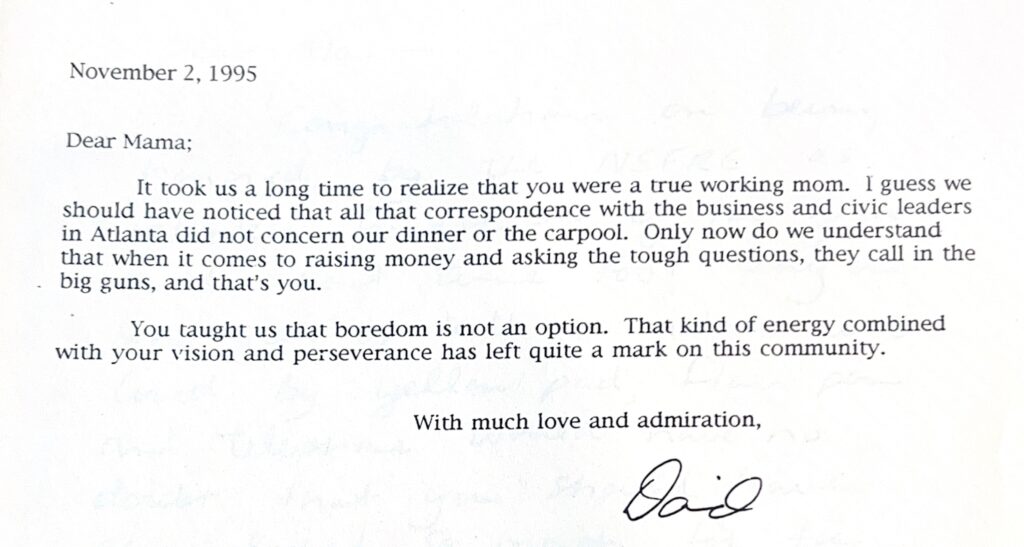
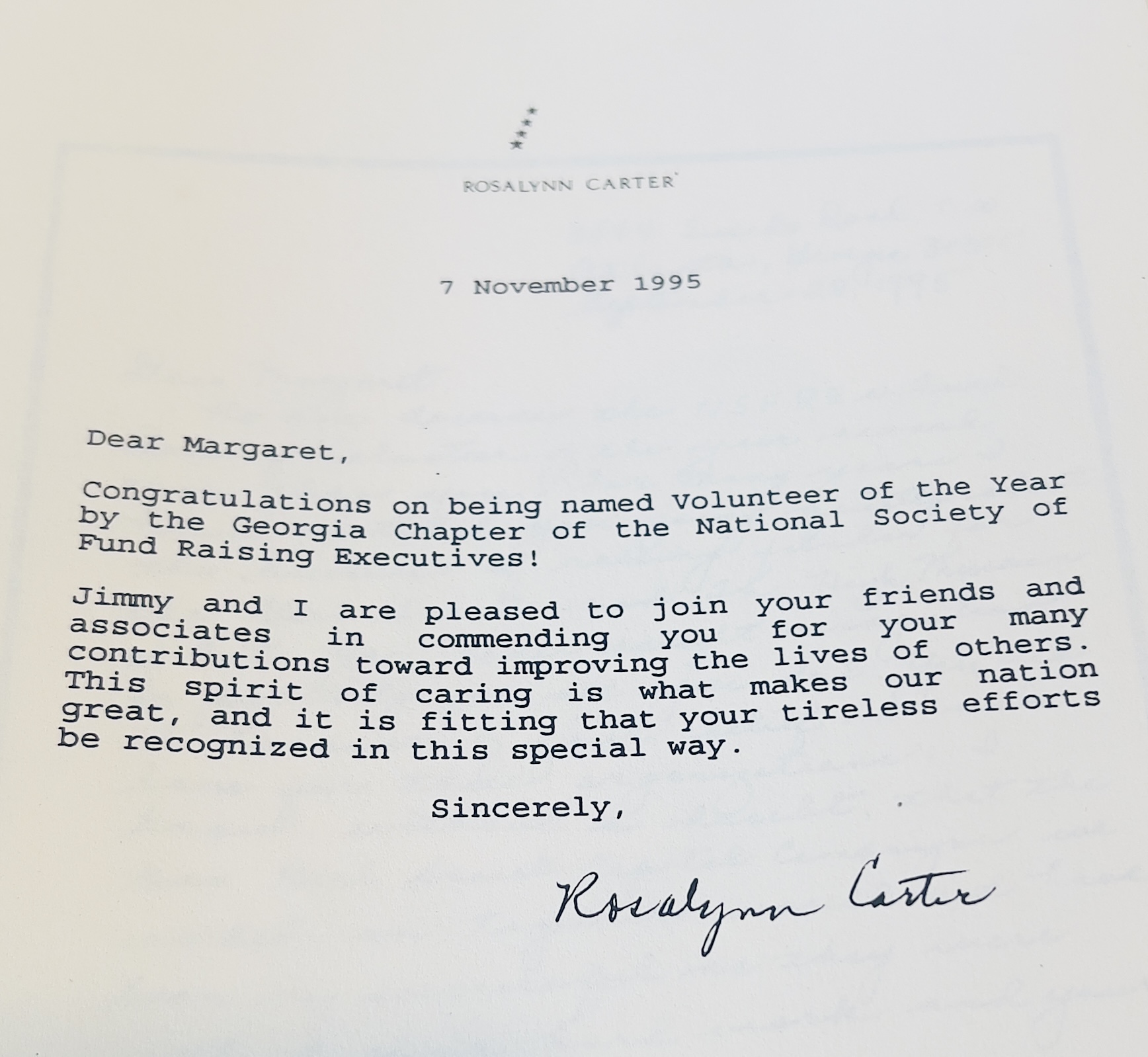
The following letters from Margaret’s son, David, and from Rosalynn Carter were part of a collection of letters congratulating Margaret Boyd Perdue when she won Volunteer of the Year at the National Philanthropy Day event in 1995.