

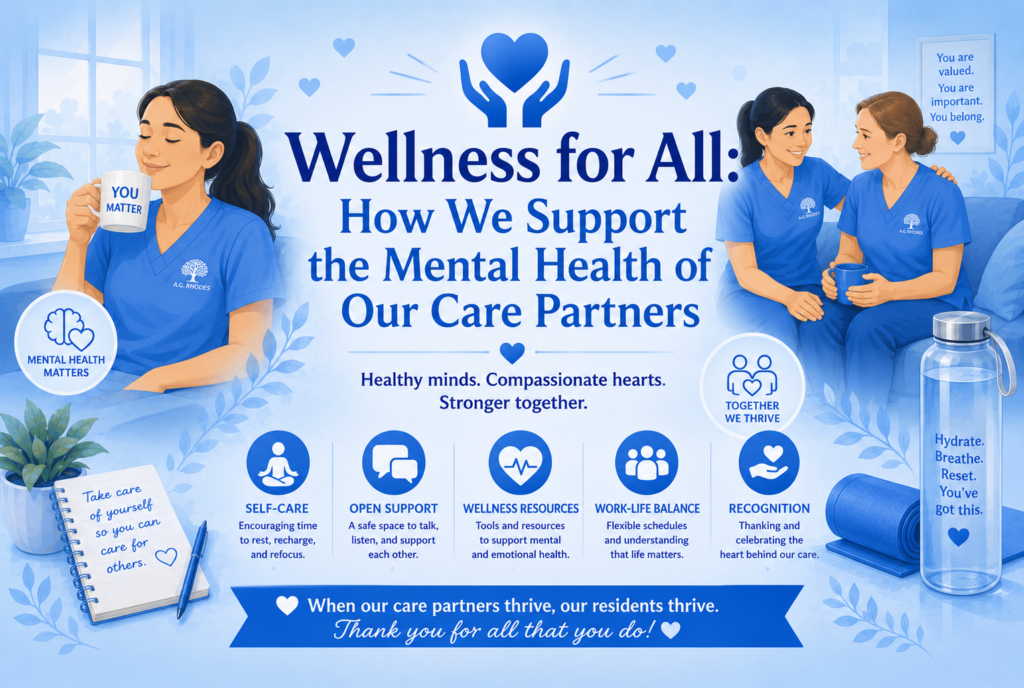
 Caring for older adults is meaningful work. It is also work that requires compassion, patience, resilience, emotional awareness, and a deep commitment to the dignity of every person receiving care. At A.G. Rhodes, we recognize that supporting older adults means supporting the people who provide that care, too.
Our care partners play an essential role in creating an environment where older adults can feel safe, respected, connected, and valued. Their emotional well-being directly influences their ability to bring compassion and presence to their work each day. That is why mental health and caregiver wellness are important parts of our approach to senior care.
We believe wellness should encompass the whole person. Physical health matters, but so do emotional health, relationships, purpose, belonging, rest, and the ability to ask for support when it is needed. By creating a culture where care partners are encouraged to prioritize their own well-being, we can help build a stronger, more compassionate community for everyone.
Why Care Partner Mental Health Matters
Working closely with older adults can be deeply rewarding. Care partners have opportunities to build relationships, celebrate milestones, provide comfort, and make a meaningful difference in the lives of residents and their families.
At the same time, caregiving can involve emotional and physical demands. Care partners may encounter situations involving illness, loss, changing abilities, behavioral challenges, family concerns, and other circumstances that require considerable emotional energy.
Without appropriate support, ongoing workplace stress can contribute to caregiver fatigue, emotional exhaustion, reduced engagement, and burnout.
Supporting mental health is therefore not simply about responding when someone is struggling. It is about creating a workplace culture where wellness is valued consistently and where people feel comfortable recognizing their needs and seeking appropriate support.
We strive to foster an environment where our care partners know that taking care of themselves is not selfish. Self-care is an important part of sustainable caregiving.
Creating a Culture of Wellness for Care Partners
A healthy workplace culture starts with the understanding that every care partner is a person first.
We seek to create an environment where people can communicate openly, build meaningful relationships, and feel that their contributions matter. A culture of wellness encourages people to recognize stress before it becomes overwhelming and gives them opportunities to connect with others.
For us, supporting mental health means looking beyond a single program or activity. It means considering wellness throughout the care partner experience.
We emphasize principles such as:
- Connection: Encouraging meaningful relationships among care partners, residents, families, and the broader community.
- Compassion: Recognizing that everyone experiences challenges and deserves understanding.
- Respect: Valuing the experiences, perspectives, and contributions of every care partner.
- Communication: Creating opportunities for people to express concerns, ask questions, and seek assistance.
- Balance: Recognizing the importance of rest, personal time, family, and interests outside of work.
- Purpose: Helping care partners recognize the meaningful difference their work makes in the lives of older adults.
- Support: Encouraging care partners to access appropriate resources when they need additional assistance.
These principles help create a workplace where wellness is not treated as an afterthought.
Recognizing the Signs of Caregiver Stress and Burnout
Mental health challenges do not always look the same for everyone. A care partner who is experiencing stress may not openly say that they are struggling.
That makes awareness especially important.
Potential signs of caregiver stress or burnout may include persistent fatigue, difficulty concentrating, irritability, changes in motivation, emotional withdrawal, feelings of being overwhelmed, or difficulty maintaining a healthy balance between work and personal life.
Recognizing these signs does not mean labeling someone or assuming what they are experiencing. Instead, awareness gives us an opportunity to approach one another with greater compassion.
We encourage a culture in which asking for help is viewed as a responsible and healthy decision rather than a weakness.
When people feel supported, they may be better positioned to address challenges before they become more difficult to manage.
The Importance of Connection and Community
Human connection is fundamental to emotional wellness.
Care partners spend much of their working lives interacting with residents, families, coworkers, and other members of the senior living community. These relationships can provide a strong sense of purpose and belonging.
Positive workplace relationships can also make challenging days easier to navigate. Having colleagues who understand the realities of caregiving can provide opportunities to share experiences, offer encouragement, and remind one another that no one has to face every challenge alone.
We believe that community is an important part of mental health.
Our goal is to cultivate an environment where care partners can develop authentic professional relationships while also knowing that their voices and experiences matter.
Supporting Emotional Wellness Through Purposeful Work
Purpose can be a powerful component of well-being.
For many people who choose careers in senior care, the opportunity to serve older adults is one of the reasons the work is meaningful. Helping someone feel comfortable, listening to their stories, assisting with everyday activities, or simply spending time with a resident can have a profound impact.
Care partners may sometimes become focused on the tasks that need to be completed throughout a busy day. Yet behind every task is a person.
A meal is an opportunity to provide nourishment and connection. Assistance with daily activities can preserve dignity and independence. A conversation can reduce loneliness. A moment of patience can help someone feel heard.
By recognizing the purpose behind the work, we can help reinforce the meaningful contribution care partners make every day.
Encouraging Care Partners to Prioritize Self-Care
Self-care can mean different things to different people. It does not necessarily require elaborate activities or significant amounts of time.
For one person, self-care may mean getting adequate rest. For another, it may mean spending time with family, enjoying a hobby, exercising, connecting with friends, practicing mindfulness, or simply having uninterrupted time away from work.
We encourage our care partners to recognize the importance of maintaining healthy routines outside the workplace.
Small, consistent habits can contribute to overall wellness. Taking breaks when appropriate, staying connected with supportive people, getting enough sleep, engaging in physical activity, and making time for enjoyable activities can all play a role in maintaining balance.
Most importantly, care partners should understand that their own well-being deserves attention and care.
Mental Health Support Is Part of Quality Senior Care
The well-being of care partners and the quality of care provided to older adults are closely connected.
Caregiving requires people to be emotionally present. When care partners have access to appropriate support and feel valued within their workplace, they may be better equipped to provide the patience, empathy, and attentiveness that older adults deserve.
That is why mental health support should be considered part of a broader commitment to quality senior care.
At A.G. Rhodes, we recognize that caring for older adults involves more than meeting physical needs. It involves creating an environment that supports dignity, connection, emotional well-being, and quality of life.
Supporting our care partners helps strengthen that mission.
Making It Easier to Ask for Help
One of the most important aspects of a healthy workplace culture is reducing the stigma around asking for support.
People may hesitate to talk about stress because they believe they should be able to handle everything themselves. Others may worry that acknowledging emotional difficulties could be perceived negatively.
We want to challenge that mindset.
Asking for help can be an important act of self-awareness. Everyone experiences difficult periods, and recognizing when additional support may be helpful is a sign of personal responsibility.
We encourage care partners to communicate with appropriate workplace resources and qualified professionals when they need support beyond what coworkers or supervisors can provide.
Mental health concerns can be complex, and professional assistance may be appropriate when stress, anxiety, depression, grief, or other emotional challenges begin interfering with daily life.
Wellness Benefits the Entire Senior Care Community
When we invest in the well-being of care partners, the benefits extend beyond individual employees.
Residents benefit from compassionate and engaged caregivers. Families benefit from knowing their loved ones are being cared for by people who are supported in their work. Care partners benefit from a stronger sense of community and belonging.
Ultimately, wellness contributes to a healthier senior care environment.
Our commitment is to continue creating opportunities for care partners to feel supported, respected, connected, and valued.
We know that caregiving is both a responsibility and a relationship. The people who dedicate themselves to caring for older adults deserve meaningful support in return.
Supporting the People Who Care for Others
At A.G. Rhodes, we believe caring for older adults begins with caring about the people who provide that care.
Our care partners bring compassion, skill, patience, and dedication to their work. Their well-being matters—not only because they are essential to our mission, but because every person deserves to work in an environment where they feel respected and supported.
We remain committed to fostering a culture where mental health, emotional wellness, connection, and purpose are valued.
When we support our care partners, we strengthen the community we share with residents and families.
Learn More About A.G. Rhodes
If you are looking for a senior care community that values compassionate care, dignity, meaningful relationships, and the well-being of the people who make that care possible, we invite you to learn more about A.G. Rhodes.
Contact A.G. Rhodes today to learn more about our communities, senior care services, and commitment to creating supportive environments for older adults and the people who care for them.
Frequently Asked Questions About Care Partner Mental Health
Why is mental health important for care partners?
Mental health is important because caregiving can involve emotional, physical, and interpersonal demands. Supporting care partners’ emotional well-being can help promote a healthier workplace culture while enabling them to remain engaged and compassionate in their work.
What is caregiver burnout?
Caregiver burnout is a state of prolonged physical, emotional, or mental exhaustion that can develop when caregiving demands become difficult to manage over time. Potential warning signs include persistent fatigue, irritability, reduced motivation, emotional exhaustion, and feeling overwhelmed.
How can care partners manage workplace stress?
Helpful strategies may include maintaining healthy routines, getting adequate rest, staying connected with supportive people, taking appropriate breaks, participating in enjoyable activities, communicating concerns, and seeking professional support when necessary.
How can senior care organizations support employee mental health?
Senior care organizations can support mental health by fostering open communication, encouraging healthy workplace relationships, recognizing employee contributions, providing appropriate resources, promoting work-life balance, and creating a culture where seeking help is respected.
Why is self-care important for caregivers?
Self-care helps caregivers maintain their own physical and emotional well-being. Because caregiving requires sustained energy and compassion, taking appropriate care of oneself can be an important part of maintaining a healthy and sustainable approach to caregiving.
What are common signs that a care partner may be experiencing stress?
Signs can vary, but may include persistent tiredness, irritability, difficulty concentrating, withdrawal from others, reduced motivation, feeling overwhelmed, or changes in normal behavior. These signs should be approached with compassion rather than assumptions.
When should someone seek professional mental health support?
Professional support may be appropriate when emotional distress becomes persistent, difficult to manage, or begins interfering with work, relationships, sleep, daily activities, or overall quality of life. A qualified mental health professional can help determine what type of support may be appropriate.
How does supporting care partners benefit older adults?
Care partners who feel supported and valued may be better positioned to provide attentive, compassionate care. A strong workplace culture can contribute to a positive environment for residents, families, and employees alike.