

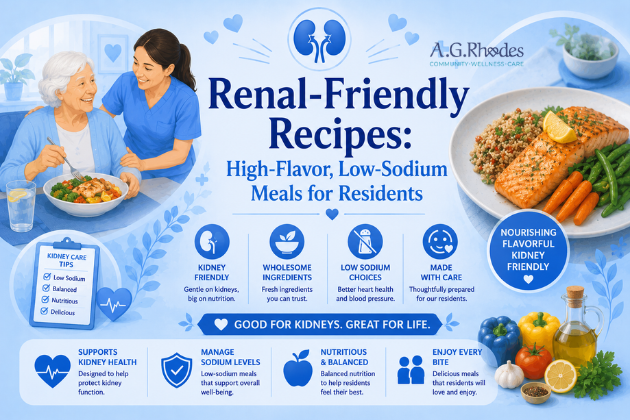
 Maintaining proper nutrition is an important part of supporting overall health and wellness for older adults, especially those living with kidney-related health concerns. For many residents in senior care communities, dietary recommendations may include limiting sodium while still enjoying meals that are satisfying, nourishing, and full of flavor.
The misconception that low-sodium meals must be bland often discourages people from embracing renal-friendly eating. In reality, thoughtfully prepared meals can deliver exceptional taste through the use of fresh ingredients, herbs, spices, citrus, aromatics, and cooking techniques that enhance natural flavors without relying heavily on salt.
For residents following a renal-conscious diet, meal planning should focus on balancing flavor, nutrition, and individual dietary recommendations. Whether meals are prepared in a senior living community, skilled nursing center, rehabilitation setting, or at home, there are many ways to create delicious dishes that align with kidney-friendly nutrition goals.
Understanding Renal-Friendly Nutrition
A renal-friendly diet is generally designed to support kidney health by managing nutrients that the kidneys may have difficulty processing efficiently. Dietary recommendations vary significantly depending on an individual’s medical condition, stage of kidney disease, medications, and healthcare provider guidance.
Many kidney-conscious meal plans emphasize:
- Lower sodium intake
- Balanced protein consumption
- Appropriate fluid management when recommended
- Monitoring potassium levels when necessary
- Monitoring phosphorus intake when recommended
- Nutrient-dense whole foods
- Fresh ingredients over highly processed foods
Since dietary needs can differ greatly from person to person, meal plans should always align with recommendations from healthcare providers and registered dietitians.
However, one principle remains consistent: reducing sodium does not mean sacrificing flavor.
Why Sodium Reduction Matters in Senior Nutrition
Many processed foods contain significant amounts of sodium. Soups, frozen meals, canned vegetables, deli meats, sauces, dressings, and packaged snacks often contribute substantial sodium to the daily diet.
Excess sodium intake may contribute to:
- Fluid retention
- Increased thirst
- Swelling
- Elevated blood pressure
- Additional strain on the body
For seniors, reducing sodium intake often begins by choosing fresh ingredients and preparing meals from scratch whenever possible.
The good news is that flavor can come from many sources beyond salt.
Building Flavor Without Excess Sodium
Creating high-flavor, low-sodium meals begins with understanding how ingredients interact.
Professional chefs and nutrition teams frequently rely on several flavor-building strategies:
Fresh Herbs
Fresh herbs add brightness and complexity to meals.
Popular options include:
- Basil
- Parsley
- Cilantro
- Dill
- Chives
- Rosemary
- Thyme
- Sage
- Oregano
These ingredients can transform simple dishes into flavorful meals while contributing little or no sodium.
Aromatic Vegetables
Aromatics provide a flavorful foundation for many recipes.
Examples include:
- Garlic
- Onions
- Shallots
- Leeks
- Celery
- Ginger
Roasting or sautéing these ingredients often deepens their flavor and adds richness to recipes.
Acidic Ingredients
Acidity can make flavors taste brighter and more vibrant.
Options may include:
- Lemon juice
- Lime juice
- Vinegar
- Certain approved fruit-based ingredients
A squeeze of citrus can often provide the flavor boost many people seek from salt.
Salt-Free Seasoning Blends
Many salt-free seasoning combinations can enhance foods without significantly increasing sodium intake.
Examples may include blends featuring:
- Garlic powder
- Onion powder
- Paprika
- Black pepper
- Thyme
- Oregano
- Rosemary
- Parsley
These combinations add depth while supporting lower-sodium meal preparation.
Renal-Friendly Breakfast Recipes
Herb Vegetable Egg Scramble
A flavorful breakfast can start the day on a positive note.
Ingredients:
- Eggs or egg substitute as recommended
- Diced onions
- Bell peppers
- Fresh parsley
- Chives
- Olive oil
Preparation:
Lightly sauté vegetables until tender. Add eggs and cook gently. Finish with fresh herbs for a flavorful breakfast that does not rely on excess sodium.
Blueberry Cinnamon Oatmeal
This simple breakfast combines comfort and flavor.
Ingredients:
- Oats
- Fresh blueberries
- Cinnamon
- Approved milk alternative or milk
- Vanilla extract
The natural sweetness of berries and aromatic cinnamon create a satisfying breakfast option.
Renal-Friendly Lunch Recipes
Lemon Herb Chicken Salad
Ingredients:
- Cooked chicken
- Chopped celery
- Fresh parsley
- Lemon juice
- Low-sodium dressing ingredients approved by dietary guidelines
This dish offers fresh flavor through herbs and citrus rather than relying on heavily salted ingredients.
Cucumber and Herb Pasta Salad
Using fresh vegetables and a light herb dressing creates a refreshing meal suitable for many renal-conscious meal plans.
Ingredients may include:
- Cooked pasta
- Cucumbers
- Fresh dill
- Parsley
- Lemon vinaigrette
The result is a satisfying dish with bright, fresh flavors.
Renal-Friendly Dinner Recipes
Garlic Herb Baked Chicken
Baked chicken remains a favorite in many senior dining programs because it is versatile and flavorful.
Ingredients:
- Chicken breast
- Garlic
- Rosemary
- Thyme
- Olive oil
- Lemon zest
Preparation:
Coat chicken with herbs and olive oil. Bake until fully cooked. The aromatic herbs create flavor without requiring large amounts of sodium.
Roasted Vegetable Medley
Roasting vegetables intensifies their natural sweetness.
Ingredients:
- Approved vegetables based on dietary recommendations
- Olive oil
- Garlic
- Rosemary
- Black pepper
Roasted vegetables can serve as a satisfying side dish alongside many renal-friendly entrées.
Turkey and Herb Meatballs
Instead of relying on heavily seasoned packaged products, homemade turkey meatballs can provide excellent flavor.
Ingredients:
- Lean ground turkey
- Garlic
- Parsley
- Onion
- Black pepper
- Approved breadcrumbs
Baking rather than frying can help create a lighter meal option.
Renal-Friendly Soup Ideas Without Excess Sodium
Soup is often associated with high sodium levels, but homemade versions allow greater control over ingredients.
Creamy Cauliflower Soup
Ingredients:
- Cauliflower
- Onion
- Garlic
- Approved dairy ingredients
- Fresh herbs
Blending roasted cauliflower creates a creamy texture without requiring excessive sodium.
Vegetable and Herb Soup
Fresh vegetables, garlic, onions, and herbs can create a flavorful broth-based soup that emphasizes natural ingredients.
Careful ingredient selection allows flavor to develop through cooking techniques rather than relying on salt.
Healthy Snacks for Renal-Conscious Residents
Snacks can support energy and enjoyment throughout the day.
Potential options may include:
- Fresh fruit approved by dietary guidelines
- Unsalted crackers
- Rice cakes
- Fresh vegetable sticks
- Homemade low-sodium dips
- Unsalted popcorn
- Yogurt when appropriate
Choosing minimally processed foods often helps reduce sodium intake while providing satisfying snack options.
Cooking Techniques That Enhance Flavor Naturally
Flavor comes from more than ingredients alone.
Several cooking methods naturally enhance taste:
Roasting
Roasting caramelizes natural sugars and intensifies flavor.
Grilling
Grilling introduces smoky notes that add complexity to foods.
Slow Cooking
Slow cooking allows ingredients to develop deeper flavor over time.
Sautéing Aromatics
Cooking onions, garlic, and herbs before combining ingredients can significantly improve the overall taste of a meal.
These techniques help create satisfying dishes without excessive reliance on sodium.
Meal Planning Tips for Residents Following Renal Diets
Successful renal-friendly dining often begins with thoughtful planning.
Helpful strategies include:
- Using fresh ingredients whenever possible
- Reading nutrition labels carefully
- Selecting lower-sodium products
- Preparing meals in advance
- Keeping herbs and spices available
- Avoiding excessive use of processed foods
- Following individualized dietary recommendations
Meal planning can help ensure that residents enjoy both variety and nutritional support.
Balancing Flavor, Nutrition, and Resident Satisfaction
Food plays an important role in quality of life. Residents should be able to enjoy meals that are both nutritious and appealing.
A successful renal-friendly dining program focuses on:
- Taste
- Variety
- Visual appeal
- Appropriate nutrition
- Individual preferences
- Dietary compliance
When meals are thoughtfully prepared, residents can continue enjoying food while following dietary recommendations.
How Senior Care Communities Support Specialized Nutrition
Senior care communities often serve residents with diverse dietary needs. Nutrition teams, culinary professionals, nursing staff, and healthcare providers frequently collaborate to create individualized meal plans.
Specialized dining programs may support residents with:
- Kidney-related dietary needs
- Diabetes management
- Heart-healthy nutrition goals
- Modified textures
- Food allergies
- Individual preferences
This collaborative approach helps ensure meals align with both health goals and resident satisfaction.
Discover Compassionate Senior Care at A.G. Rhodes
At A.G. Rhodes, we understand that nutrition is an important part of supporting overall health, comfort, and quality of life. Our commitment to person-centered care includes recognizing the unique dietary needs of each resident while promoting dignity, wellness, and enjoyment at every stage of aging.
If you are exploring senior care options for a loved one, contact A.G. Rhodes to learn more about our compassionate approach to care, rehabilitation, wellness, and resident-centered services. Discover how our team supports the physical, emotional, and nutritional well-being of older adults every day.
The Importance of Enjoyable Renal-Friendly Dining
Renal-friendly meals do not need to be restrictive or flavorless. Through the thoughtful use of fresh ingredients, herbs, spices, cooking techniques, and individualized meal planning, it is possible to create meals that are both satisfying and supportive of dietary goals.
Whether preparing breakfast, lunch, dinner, soups, snacks, or special occasion meals, focusing on natural flavors allows residents to enjoy food while adhering to appropriate nutrition recommendations.
As senior care continues to evolve, culinary programs that prioritize both health and enjoyment will remain an essential part of enhancing residents’ quality of life.
Conclusion
Flavorful food and kidney-conscious nutrition can successfully coexist. By focusing on fresh ingredients, creative seasoning techniques, and thoughtful meal preparation, residents can enjoy satisfying meals that support their dietary goals.
From herb-infused entrées and vibrant vegetable dishes to comforting soups and nourishing breakfasts, renal-friendly recipes offer countless opportunities to create delicious dining experiences. When nutrition is approached with both care and creativity, residents can continue enjoying meals that contribute to their comfort, wellness, and overall quality of life.
Frequently Asked Questions About Renal-Friendly Recipes
What is a renal-friendly diet?
A renal-friendly diet is designed to support individuals with kidney-related health concerns. Recommendations vary depending on medical conditions and should be tailored by healthcare professionals.
Why are low-sodium meals important for kidney health?
Lower-sodium meals may help reduce excess fluid retention and support overall dietary goals recommended for individuals with kidney-related conditions.
Can low-sodium meals still taste good?
Yes. Fresh herbs, spices, garlic, onions, citrus, and cooking techniques such as roasting and grilling can create flavorful meals without relying heavily on salt.
What seasonings are commonly used in renal-friendly recipes?
Popular options include parsley, basil, rosemary, thyme, dill, garlic powder, onion powder, paprika, and black pepper, depending on individual dietary recommendations.
Are fresh foods better than processed foods for low-sodium diets?
Fresh foods often contain less sodium than heavily processed foods, making them a common choice in many renal-friendly meal plans.
Can seniors enjoy snacks on a renal-friendly diet?
Yes. Many snacks can fit into renal-conscious meal plans when selected according to individual dietary recommendations.
How can senior care communities accommodate kidney-friendly diets?
Many senior care communities work with nutrition professionals and healthcare providers to develop individualized meal plans that align with residents’ dietary needs.
What foods are typically high in sodium?
Processed meats, canned soups, frozen meals, packaged snacks, sauces, and many restaurant foods often contain significant amounts of sodium.
Should residents follow the same renal diet recommendations?
No. Dietary recommendations vary based on individual medical conditions, medications, kidney function, and healthcare provider guidance.
How can families learn more about specialized nutrition in senior care?
Families should speak with healthcare providers, dietitians, and senior care communities to understand available nutritional services and individualized dietary support.