

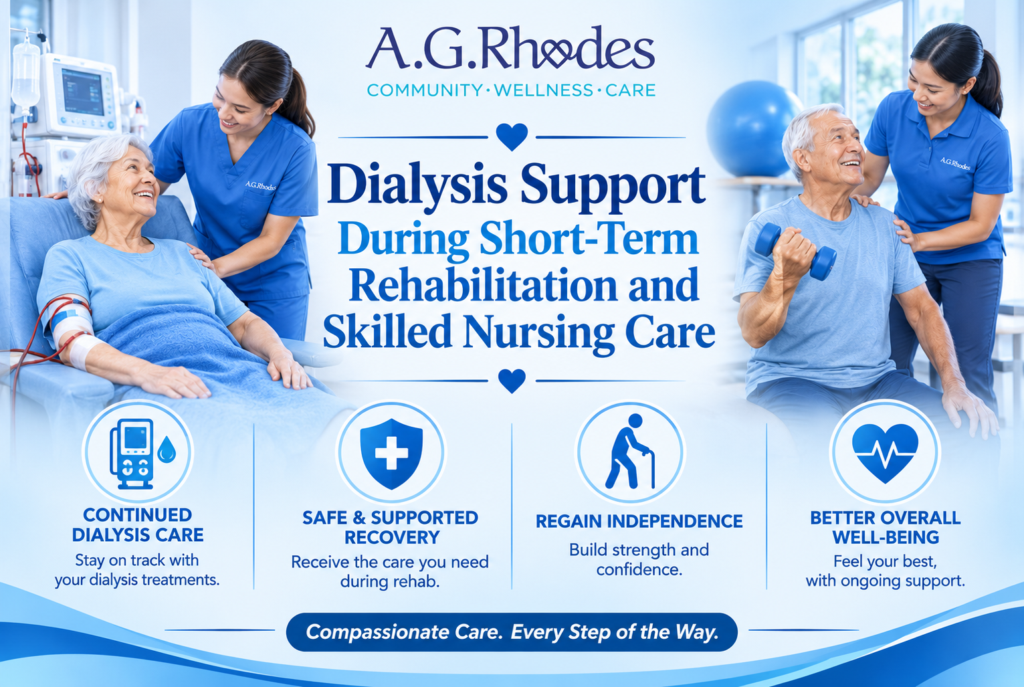
 Older adults who require regular dialysis treatments may also need skilled nursing care and rehabilitation following a hospitalization, illness, injury, or surgical procedure. During these periods, maintaining consistent dialysis treatments is an important part of supporting their overall health and recovery.
At A.G. Rhodes, we understand that residents may have complex medical needs that require coordinated care. Our short-term recovery and rehabilitation services provide skilled nursing support, personalized attention, and access to specialized services, including on-site dialysis at our Atlanta and DeKalb communities.
For eligible residents who require both dialysis and skilled nursing care, having access to these services within the same community can help simplify treatment coordination while supporting their recovery and long-term health needs.
Understanding Dialysis Needs During Rehabilitation and Skilled Nursing Care
Dialysis is a life-sustaining treatment for individuals whose kidneys can no longer adequately remove waste products and excess fluid from the bloodstream. Many individuals receiving maintenance hemodialysis follow a consistent treatment schedule, often attending sessions three times a week.
For older adults who require hospitalization, rehabilitation, or ongoing nursing care, maintaining this treatment schedule is essential. Missing or delaying dialysis without medical guidance can result in serious complications, including fluid overload, elevated potassium levels, and other potentially dangerous health problems.
When considering a nursing and rehabilitation community, families should understand how dialysis treatments will be coordinated alongside other medical and recovery needs.
Important considerations include:
- Dialysis scheduling: Maintaining the individual’s prescribed treatment schedule and coordinating it with other healthcare services.
- Medical records: Providing relevant medical information, treatment prescriptions, and laboratory results.
- Medication management: Maintaining an accurate list of medications, dosages, and administration schedules.
- Dietary requirements: Following appropriate nutritional guidelines, including prescribed restrictions on sodium, potassium, phosphorus, and fluid intake.
- Nursing support: Determining whether assistance with medication administration, mobility, daily activities, and other healthcare needs is necessary.
- Rehabilitation coordination: Ensuring therapy sessions and recovery activities are appropriately coordinated with dialysis treatments.
These considerations are particularly important for older adults managing multiple medical conditions or recovering from a significant health event.
How A.G. Rhodes Supports Residents Who Require Dialysis
At A.G. Rhodes, we recognize that residents may need specialized medical services alongside rehabilitation and skilled nursing care.
Our short-term recovery services are designed for individuals who need skilled nursing and rehabilitation following hospitalization, surgery, illness, or injury before returning home or transitioning to another appropriate care setting.
For eligible residents who require dialysis, our Atlanta and DeKalb communities offer an important resource: on-site dialysis clinics operated through our partnership with DaVita Kidney Care.
Having dialysis services within the nursing home community can help reduce the logistical challenges associated with coordinating treatment at an outside dialysis center.
1. On-Site Dialysis Services at Selected Locations
Consistent access to dialysis is essential for individuals managing advanced kidney disease.
At our Atlanta and DeKalb locations, eligible residents can receive dialysis through on-site clinics within the nursing home community.
This arrangement can help eliminate the need for routine transportation to an off-site dialysis center for residents receiving treatment through these clinics.
Through our partnership with DaVita Kidney Care, residents benefit from collaboration between dialysis professionals and their healthcare providers.
This coordination supports communication among the dialysis team, A.G. Rhodes nursing professionals, and the resident’s physician.
Dialysis availability, treatment arrangements, and admission eligibility must be confirmed before a stay is scheduled.
2. Personalized Nursing Care and Medical Coordination
Every resident has different healthcare needs. An older adult receiving dialysis may also manage diabetes, cardiovascular conditions, mobility limitations, or other chronic illnesses.
For this reason, personalized care planning and communication among healthcare professionals are important parts of the care process.
Our nursing team works to understand each resident’s medical history, current care requirements, medications, and individual preferences.
Before admission, families and healthcare providers should coordinate the necessary medical documentation, including:
- Current medical history and diagnoses.
- Physician orders and treatment recommendations.
- Dialysis prescription and treatment schedule.
- Current medication list.
- Relevant laboratory results.
- Dietary and fluid restrictions.
- Mobility and personal care requirements.
- Emergency contact and healthcare provider information.
Having this information available helps the care team understand the resident’s needs and determine whether the appropriate services can be provided during the stay.
3. Rehabilitation for Seniors Recovering From Illness or Surgery
Some older adults require skilled nursing and rehabilitation following hospitalization, surgery, an injury, or an illness.
Our short-term recovery services are designed to support individuals during this transitional period while helping them work toward their individual recovery goals.
Depending on the resident’s physician-directed care plan and individual needs, rehabilitation services may include:
- Physical therapy: Helps improve strength, balance, mobility, and physical function.
- Occupational therapy: Supports independence with everyday activities, including dressing, bathing, and other personal care tasks.
- Speech therapy: Addresses communication and swallowing difficulties when clinically appropriate.
- Skilled nursing care: Provides medical monitoring, medication administration, and assistance with prescribed treatments.
- Nutritional support: Helps address individual dietary requirements and nutritional concerns.
For residents receiving dialysis, coordinating rehabilitation activities with treatment schedules is an important consideration.
Our interdisciplinary approach supports communication among the professionals involved in each resident’s care.
4. Nutritional Support for Residents Receiving Dialysis
Nutrition is an essential part of managing kidney disease.
Many individuals receiving dialysis must follow specific dietary recommendations to help regulate fluid levels and maintain appropriate concentrations of important minerals and electrolytes.
Depending on the individual’s medical condition and laboratory results, dietary recommendations may address:
- Sodium: Limiting sodium intake can help manage thirst, fluid retention, and blood pressure.
- Potassium: Monitoring potassium intake is important because elevated levels can affect heart rhythm.
- Phosphorus: Managing phosphorus intake helps reduce the risk of complications associated with mineral imbalances.
- Fluid intake: Following prescribed fluid restrictions can help prevent excess fluid accumulation between treatments.
- Protein: Individuals receiving dialysis may require adequate protein to maintain muscle mass and support overall nutritional health.
At A.G. Rhodes, nutritional support is an important part of resident care. Our approach considers individual dietary requirements and the recommendations of healthcare professionals.
Families should provide the resident’s current dietary instructions so that appropriate nutritional considerations can be incorporated into the care plan.
5. A Supportive Environment for Recovery and Long-Term Care
Medical treatment is only one part of the experience of living in a nursing and rehabilitation community.
Older adults also benefit from an environment that supports emotional well-being, social interaction, and personal comfort.
At A.G. Rhodes, we strive to create a welcoming community where residents receive compassionate attention and opportunities to participate in activities suited to their interests and abilities.
Our programs include therapeutic and recreational activities that support engagement and quality of life.
For individuals who require both rehabilitation and dialysis, coordinating daily activities around treatment schedules can help make the overall experience more manageable.
We also recognize that family involvement is important. Maintaining communication with loved ones helps families stay informed about their relative’s needs and progress.
Planning a Short-Term Rehabilitation Stay for Someone Receiving Dialysis
Planning ahead is especially important when an older adult requires dialysis alongside skilled nursing and rehabilitation services.
Because dialysis schedules and medical requirements are individualized, families should contact A.G. Rhodes before arranging admission.
The following steps can help make the process more organized.
Step 1: Discuss the Care Needs With the Individual’s Physician
Start by discussing the proposed nursing and rehabilitation stay with the resident’s physician, nephrologist, or hospital discharge planning team.
A healthcare professional can determine whether a short-term nursing and rehabilitation stay is appropriate and provide the necessary medical recommendations.
Step 2: Contact the Appropriate A.G. Rhodes Location
Contact our admissions team to discuss the individual’s care needs and determine whether the selected location can accommodate them.
Be sure to explain that the individual receives dialysis and provide information about their current treatment requirements.
Our Atlanta and DeKalb locations have on-site dialysis clinics, but admission and treatment availability must be confirmed individually.
Step 3: Coordinate Dialysis Arrangements
Provide information about the resident’s current dialysis provider, treatment schedule, prescription, and nephrologist.
The dialysis arrangements should be coordinated with the appropriate healthcare professionals before admission.
Families should not assume that treatment arrangements can automatically be transferred without prior coordination and confirmation.
Step 4: Prepare Medical and Personal Information
Gather relevant medical records, physician orders, medication lists, insurance information, and other documentation requested by the admissions team.
Also communicate personal preferences, mobility needs, dietary restrictions, and any assistance the individual may require.
Step 5: Confirm Admission and Financial Arrangements
Ask about room availability, admission requirements, applicable fees, and payment options.
Coverage depends on the individual’s payer source, eligibility, medical needs, and applicable insurance guidelines.
Planning these details in advance can help families make informed decisions about the appropriate care setting.
Why Choose A.G. Rhodes for Nursing and Rehabilitation Care?
Choosing a nursing and rehabilitation community requires careful consideration, particularly when an older adult has complex medical needs.
At A.G. Rhodes, our mission is to provide expert and compassionate rehabilitation therapy and residential care to seniors throughout metro Atlanta.
We combine personalized nursing care with rehabilitation services and specialized programs designed to support residents’ physical, emotional, and social well-being.
Families considering short-term recovery or ongoing nursing care can explore several benefits:
- On-site dialysis at our Atlanta and DeKalb communities: An important resource for eligible residents who require ongoing dialysis.
- Personalized care planning: Attention to each resident’s medical requirements, preferences, and individual goals.
- Skilled nursing services: Professional nursing support for individuals who require ongoing medical care.
- Rehabilitation programs: Physical, occupational, and speech therapy services based on individual needs.
- Nutritional support: Attention to prescribed dietary requirements and specialized nutritional needs.
- Compassionate care: A welcoming environment that values dignity, respect, and quality of life.
Whether an older adult needs short-term rehabilitation following hospitalization or ongoing skilled nursing support, our team is available to help families understand the admissions process, discuss available services, and determine whether A.G. Rhodes may be an appropriate option.
Find Dialysis Support During Short-Term Recovery or Long-Term Care
For older adults receiving dialysis, finding an appropriate nursing and rehabilitation community is an important part of maintaining continuity of care.
At A.G. Rhodes, we are committed to providing expert and compassionate care for seniors who need short-term recovery, rehabilitation, and ongoing nursing support.
With on-site dialysis clinics at our Atlanta and DeKalb communities, we offer an important resource for eligible residents who require dialysis while receiving care in a skilled nursing environment.
Contact A.G. Rhodes today to learn more about our short-term recovery services, discuss dialysis arrangements, and explore whether one of our communities can accommodate your loved one’s healthcare needs.
Frequently Asked Questions About Dialysis and Skilled Nursing Care
- Can someone receiving dialysis stay at a nursing and rehabilitation community?
Yes. Some nursing and rehabilitation communities can accommodate individuals receiving dialysis while providing skilled nursing and rehabilitation services. Families should confirm that the facility can meet the individual’s medical needs and coordinate the required dialysis treatments before arranging admission.
At A.G. Rhodes, our Atlanta and DeKalb communities offer on-site dialysis clinics for eligible residents. Contact our admissions team to discuss availability and individual requirements.
- Does A.G. Rhodes offer dialysis services for short-term residents?
A.G. Rhodes has on-site dialysis clinics at its Atlanta and DeKalb locations through its partnership with DaVita Kidney Care. Individuals interested in a short-term rehabilitation stay should contact the appropriate location to confirm admission eligibility, dialysis availability, and treatment arrangements.
- Can someone receive rehabilitation and dialysis during the same nursing home stay?
Potentially, yes. Eligible residents may receive nursing and rehabilitation services while continuing their prescribed dialysis treatments. At A.G. Rhodes, available rehabilitation services include physical, occupational, and speech therapy.
The care team must coordinate treatment schedules and determine which services are appropriate for the resident.
- Does on-site dialysis eliminate the need for transportation to an outside dialysis center?
For residents receiving treatment through the on-site dialysis clinic, routine transportation to an external dialysis center may not be necessary.
This can reduce the logistical challenges associated with off-site treatment. However, transportation may still be needed for other medical appointments or services that are not available within the community.
- What medical information should families provide when arranging a nursing home stay for someone receiving dialysis?
Families should prepare the individual’s medical history, current medication list, physician orders, dialysis prescription, treatment schedule, recent laboratory results, dietary instructions, insurance information, and emergency contact details.
The admissions and healthcare teams may request additional documentation depending on the individual’s medical needs.
- What rehabilitation services are available for seniors receiving dialysis?
Depending on the resident’s physician-directed care plan and individual needs, rehabilitation may include physical therapy, occupational therapy, speech therapy, skilled nursing care, and nutritional support.
At A.G. Rhodes, rehabilitation services are designed to support recovery, improve functional abilities, and help residents work toward their individual goals.
- How long can an older adult stay at A.G. Rhodes for short-term recovery?
The length of a short-term recovery stay depends on the individual’s medical condition, physician recommendations, rehabilitation goals, and care requirements.
A.G. Rhodes provides short-term recovery services for individuals who need skilled nursing and rehabilitation, often as part of the transition from a hospital back to home or another appropriate living arrangement.
- Does A.G. Rhodes provide long-term care for individuals receiving dialysis?
A.G. Rhodes provides residential nursing care for seniors who require ongoing support. Individuals who need long-term care and dialysis should contact the appropriate Atlanta or DeKalb community to discuss their medical needs, admission eligibility, and dialysis arrangements.
- Does Medicare cover short-term nursing home stays for individuals receiving dialysis?
Medicare may cover qualifying skilled nursing facility care when specific medical, eligibility, and coverage requirements are met.
Coverage is not automatic simply because an individual receives dialysis. Families should verify Medicare eligibility, qualifying skilled nursing requirements, covered services, and any applicable cost-sharing obligations before admission.
- How can families arrange a short-term rehabilitation stay at A.G. Rhodes?
Families can contact the A.G. Rhodes location that best meets their needs to discuss admissions, available services, and medical requirements.
Our team can explain the admissions process and help determine whether the community can accommodate the individual’s care needs, including dialysis coordination when applicable.