

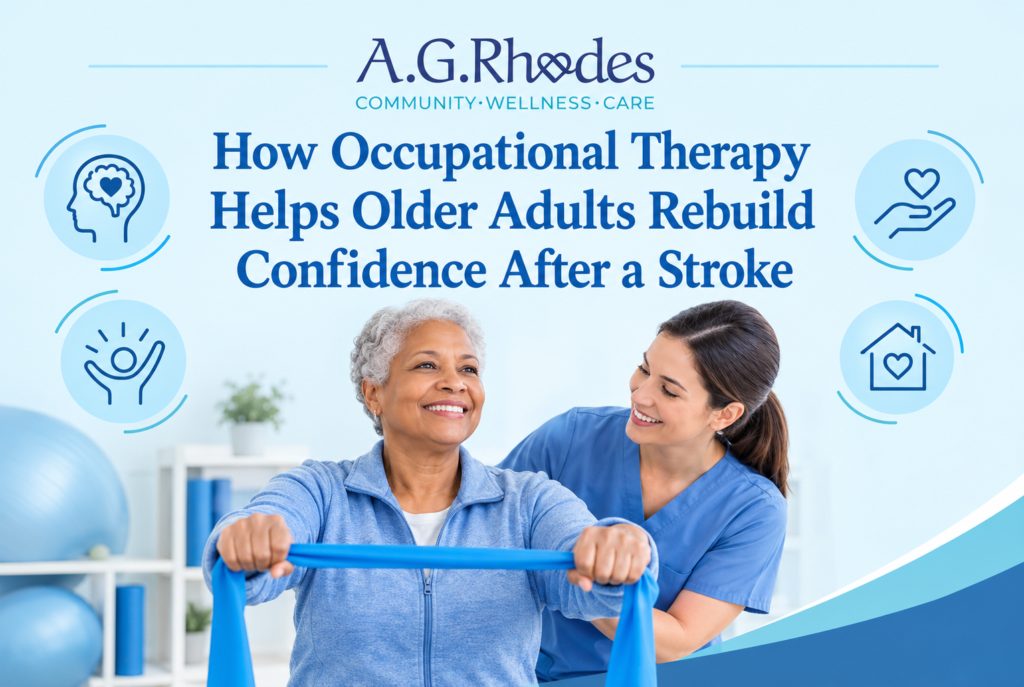
 A stroke can change many aspects of daily life, including mobility, communication, memory, and the ability to perform familiar activities independently. For older adults, tasks that once felt effortless, such as getting dressed, bathing, preparing meals, or walking across a room, may suddenly require assistance and practice. These changes can affect not only physical abilities but also self-confidence, emotional well-being, and a person’s sense of independence.
Occupational therapy plays an important role in helping older adults rebuild confidence after a stroke. Through personalized rehabilitation, practical exercises, adaptive techniques, and support with everyday activities, occupational therapists help stroke survivors develop skills that make daily life more manageable. With consistent practice and appropriate support, older adults can work toward greater independence, participate more fully in daily routines, and regain confidence in their abilities.
At A.G. Rhodes, supporting older adults means recognizing the importance of dignity, individual needs, and meaningful participation in everyday life. Understanding how occupational therapy contributes to stroke recovery can help families make informed decisions about rehabilitation and long-term care.
What Is Occupational Therapy After a Stroke?
Occupational therapy is a form of rehabilitation that helps people develop, regain, or adapt the skills needed to participate in daily activities. Following a stroke, an occupational therapist evaluates how changes in physical, cognitive, and sensory abilities affect a person’s ability to complete everyday tasks.
Unlike rehabilitation that focuses primarily on walking or general movement, occupational therapy emphasizes the activities people need and want to perform in their daily lives. These activities may include dressing, bathing, grooming, eating, managing household tasks, and participating in hobbies.
For older adults recovering from a stroke, occupational therapy may address challenges such as:
- Reduced strength or coordination: Weakness or limited control in an arm or hand can make buttons, zippers, and other small movements difficult.
- Limited range of motion: Stiffness or difficulty moving a shoulder, elbow, or wrist can interfere with dressing and grooming.
- Balance and mobility difficulties: Problems with balance may make standing during personal care unsafe.
- Changes in sensation: Reduced awareness of touch or body position can affect the ability to handle objects or recognize the position of a limb.
- Cognitive changes: Difficulties with attention, memory, planning, or sequencing may make familiar routines more challenging.
- Reduced confidence: Fear of falling, frustration, or concern about needing assistance can make daily activities feel overwhelming.
Occupational therapists assess these challenges and develop individualized strategies to help each person participate in daily activities as safely and independently as possible.
How Occupational Therapy Helps Seniors Rebuild Confidence After a Stroke
Confidence often develops as people recognize their progress and discover that they can complete meaningful activities with the right support. Occupational therapy creates opportunities for older adults to practice these skills in structured, achievable steps.
1. Relearning Everyday Activities Through Practical Exercises
After a stroke, an older adult may struggle with tasks that previously required little thought. Getting dressed, brushing teeth, or preparing a simple snack can become complicated when strength, coordination, or memory has changed.
Occupational therapists break these activities into manageable steps. For example, a person who has difficulty dressing may practice putting on a shirt while seated, positioning the affected arm first, and using the stronger arm to guide the garment into place.
Practicing real-life activities helps stroke survivors develop strategies they can apply outside therapy sessions. Rather than focusing exclusively on isolated movements, occupational therapy connects rehabilitation to practical goals.
Each completed step can provide reassurance that progress is possible. Over time, these achievements may help older adults feel more comfortable participating in daily routines.
2. Improving Fine Motor Skills and Hand Coordination
A stroke can affect the fine motor skills needed to grip objects, manipulate clothing fasteners, hold utensils, or manage personal care items. Weakness, tremors, reduced sensation, or difficulty coordinating finger movements may make these activities frustrating.
Occupational therapists may use exercises and functional activities designed to improve hand control and coordination. Depending on the individual’s abilities and rehabilitation plan, activities might include handling lightweight objects, practicing grasp-and-release movements, manipulating large buttons, or using grooming tools.
Adaptive equipment can also make everyday tasks easier. Examples include built-up utensil handles, dressing aids, easy-grip grooming tools, and clothing with simplified fasteners.
The goal is not necessarily to restore every movement exactly as it was before the stroke. Instead, therapy helps older adults identify effective ways to accomplish meaningful tasks using their current abilities and any improvements gained through rehabilitation.
3. Teaching Adaptive Dressing Techniques
Getting dressed is an important part of personal identity, privacy, and independence. When a stroke affects one side of the body, putting on a shirt, pulling up trousers, or fastening clothing may require new techniques.
Occupational therapists can teach adaptive dressing strategies that reduce unnecessary movement and make dressing more manageable.
These techniques may include:
- Sitting in a stable chair while dressing to reduce the risk of falling.
- Dressing the affected arm or leg first when appropriate.
- Using a long-handled shoehorn to put on shoes.
- Choosing clothing with elastic waistbands, larger fasteners, or front openings.
- Using a dressing stick or reacher when bending or reaching is difficult.
- Laying out clothing in the order it will be worn to simplify the process.
Therapists can also help determine which activities an individual can perform independently and where assistance remains necessary.
As older adults become more familiar with these strategies, dressing may feel less stressful and more predictable. This can support a stronger sense of control over personal care.
4. Supporting Safe Mobility During Daily Activities
Fear of falling can significantly affect confidence after a stroke. Even when an older adult has regained some mobility, uncertainty about standing, turning, or reaching for objects may lead to hesitation and reduced participation.
Occupational therapy can address the relationship between movement and everyday tasks. A therapist may help a person practice reaching for clothing while seated, transferring safely between a bed and chair, or arranging personal care supplies within easy reach.
Environmental adjustments are also important. Depending on individual needs, recommendations may include installing grab bars, improving lighting, removing loose rugs, and placing frequently used items at accessible heights.
An occupational therapist may recommend appropriate assistive equipment and coordinate with physical therapists or other healthcare professionals when additional mobility training is needed.
Building confidence does not mean encouraging older adults to take unnecessary risks. It means helping them understand their abilities, use appropriate support, and perform daily activities as safely as possible.
5. Addressing Cognitive Changes That Affect Independence
Stroke recovery can involve changes in attention, memory, problem-solving, and executive functioning. These changes may make it difficult to remember the steps involved in dressing, organize personal belongings, or complete tasks in the correct order.
Occupational therapists may introduce practical techniques to support daily functioning, such as:
- Using written checklists for familiar routines.
- Keeping personal care items in consistent locations.
- Breaking complicated activities into smaller steps.
- Reducing distractions during important tasks.
- Using visual reminders or labeled storage areas.
- Establishing predictable morning and evening routines.
For example, an older adult who forgets the sequence of dressing may benefit from laying out clothing in the order it should be put on. A simple visual cue can reduce confusion and help the person participate more actively in the routine.
These strategies can also help family members and caregivers provide consistent assistance without taking over tasks the older adult can still perform.
6. Encouraging Emotional Well-Being and Self-Confidence
Stroke recovery can be emotionally challenging. Older adults may feel frustrated when everyday activities take longer or when they need help with tasks they previously completed independently.
Occupational therapy can support emotional well-being by establishing realistic goals and recognizing progress along the way. Completing a familiar task, using an adaptive tool successfully, or requiring less assistance during a daily routine can provide meaningful evidence of improvement.
Therapists may adapt activities to prevent unnecessary frustration and encourage participation at a manageable pace. They can also communicate concerns about persistent anxiety, depression, or emotional distress to the appropriate healthcare professionals.
Family members and caregivers have an important role in this process. Offering encouragement, allowing sufficient time, and acknowledging effort can help older adults feel respected rather than rushed or discouraged.
It is equally important to recognize that recovery is not always linear. Some days may be more difficult than others, and progress can vary depending on the severity of the stroke, other health conditions, fatigue, and individual circumstances.
What Happens During an Occupational Therapy Assessment After a Stroke?
Before developing a treatment plan, an occupational therapist evaluates the older adult’s current abilities, challenges, safety needs, and personal goals.
The assessment may include several components.
Reviewing Medical History and Current Abilities
The therapist considers the stroke’s effects, relevant medical conditions, current mobility, arm and hand function, sensation, and cognitive abilities. Information from the individual, family members, and healthcare team can help provide a more complete picture.
Evaluating Activities of Daily Living
The therapist observes how the person performs practical tasks such as dressing, grooming, bathing, eating, and transferring between surfaces.
This assessment helps identify which activities can be completed independently, which require adapted techniques, and which need direct assistance.
Identifying Individual Goals
Goals should reflect what matters to the older adult. One person may want to put on a shirt without assistance, while another may prioritize preparing breakfast, managing personal grooming, or returning to a favorite hobby.
Clear, meaningful goals can make rehabilitation more relevant and help individuals recognize progress.
Developing a Personalized Rehabilitation Plan
The therapist uses assessment findings to recommend exercises, adaptive techniques, assistive devices, environmental changes, and caregiver education.
The plan should be reviewed as abilities and needs change. Rehabilitation strategies that are helpful during one stage of recovery may need adjustment as the individual gains skills or encounters new challenges.
Adaptive Equipment That Can Help Seniors Regain Independence
Adaptive equipment can simplify daily activities when a stroke affects strength, movement, balance, or coordination. The most appropriate tools depend on the person’s functional abilities and safety needs.
| Adaptive tool | How it may help |
| Dressing stick | Helps move clothing into position without excessive reaching. |
| Long-handled shoehorn | Makes putting on shoes easier for people who have difficulty bending. |
| Reacher or grabber | Helps retrieve lightweight items without unnecessary stretching or bending. |
| Button hook | Assists with fastening buttons when finger coordination is limited. |
| Elastic shoelaces | Reduce the need to tie traditional shoelaces. |
| Built-up utensil handles | May make eating easier for people with reduced grip strength. |
| Shower chair | Provides a seated option for bathing when standing is difficult or unsafe. |
| Grab bars | Provide a stable handhold when appropriately installed and used. |
Not every tool is suitable for every stroke survivor. An occupational therapist can help assess whether equipment is appropriate, demonstrate how to use it, and recommend alternatives when needed.
Assistive devices should also be selected with attention to the person’s home environment, physical abilities, and ability to use the equipment safely.
How Family Caregivers Can Support Stroke Recovery at Home
Family caregivers often provide essential support as older adults adjust to changes following a stroke. Their approach can influence whether daily activities become opportunities for practice or sources of frustration.
Encourage Participation Without Rushing
Allowing additional time for dressing, grooming, or eating can help an older adult participate in the process. Taking over every task may seem efficient, but it can reduce opportunities to practice abilities that remain.
Caregivers should balance encouragement with safety and recognize when assistance is necessary.
Break Tasks Into Manageable Steps
Complex activities may feel overwhelming after a stroke. Giving one instruction at a time and allowing the person to complete each step can make routines easier to follow.
For example, a caregiver might first place the shirt within reach, then offer a reminder about which arm to insert first if that technique has been recommended by the therapist.
Create a Safe and Organized Environment
Frequently used items should be easy to locate and access. Clear pathways, suitable seating, good lighting, and accessible storage can reduce physical demands and help prevent avoidable hazards.
Any home modifications should reflect the person’s individual needs and professional recommendations.
Celebrate Progress While Respecting Dignity
Progress may involve small changes, such as needing fewer reminders, managing one clothing fastener independently, or completing a familiar activity with less assistance.
Recognizing these improvements can encourage continued participation. At the same time, caregivers should respect personal preferences and avoid treating rehabilitation as a test of ability.
Coordinate With the Rehabilitation Team
Caregivers should ask occupational therapists to demonstrate recommended techniques and explain how to support practice between sessions. Consistent approaches can help reduce confusion and improve safety.
If a task becomes more difficult, causes pain, or appears unsafe, caregivers should contact the appropriate healthcare professional rather than pushing through the activity.
How Occupational Therapy Fits Into Long-Term Senior Care
Some older adults recover at home, while others require rehabilitation or additional support in a senior care setting. The appropriate arrangement depends on medical needs, functional abilities, available resources, and the level of assistance required.
Occupational therapy can contribute to a broader care plan that includes nursing care, physical therapy, speech-language therapy, medical management, and support with activities of daily living.
Physical therapy often emphasizes mobility, strength, balance, and movement. Occupational therapy focuses on applying abilities to everyday activities, including personal care, dressing, and functional use of the hands. These services can complement one another as part of a coordinated rehabilitation plan.
In a long-term care environment, staff members may help reinforce appropriate daily routines, provide assistance with personal care, and communicate changes in a resident’s abilities to the healthcare team.
For older adults, successful rehabilitation is not measured solely by how quickly a task can be completed. It also involves safety, comfort, personal choice, and opportunities to participate in activities that give daily life meaning.
A person’s goals may change throughout recovery. Some individuals may regain substantial independence, while others may continue to need assistance. In both situations, a thoughtful approach can help preserve dignity and support quality of life.
How Long Does It Take to Rebuild Confidence After a Stroke?
There is no single timeline for rebuilding confidence after a stroke. Recovery depends on factors such as stroke severity, the areas of the brain affected, preexisting health conditions, rehabilitation access, fatigue, and the individual’s goals.
Some older adults notice improvements in daily activities over weeks, while others require months or longer to develop new strategies and adapt to lasting changes. Progress may continue beyond the early stages of rehabilitation, although the pace and extent vary.
Regular practice, appropriate rehabilitation, and a supportive environment can help older adults work toward functional goals. However, exercises and activities should be tailored to individual abilities rather than based on a fixed timetable.
Families should discuss progress with the rehabilitation team and ask how goals can be adjusted as needs change.
When Should Families Seek Occupational Therapy After a Stroke?
Occupational therapy is often introduced during stroke rehabilitation when a person has difficulty performing everyday activities. An assessment may be appropriate if an older adult struggles with dressing, bathing, grooming, eating, household tasks, or other activities that affect independence.
Families should raise concerns with the person’s physician or rehabilitation team, particularly when difficulties interfere with safety or essential self-care.
An occupational therapy evaluation can help identify specific challenges and determine whether exercises, adaptive equipment, environmental modifications, or caregiver training may be beneficial.
If a person experiences sudden new weakness, facial drooping, difficulty speaking, sudden vision changes, or another possible sign of a stroke, seek emergency medical care immediately. These symptoms should not be treated as a routine rehabilitation issue.
Helping Older Adults Rebuild Confidence Through Occupational Therapy
Rebuilding confidence after a stroke involves more than improving physical abilities. It also means helping older adults participate in everyday activities, make choices, and recognize the skills they can use to maintain independence.
Occupational therapy helps seniors work toward these goals through practical activities, adaptive dressing techniques, assistive equipment, cognitive strategies, and individualized rehabilitation plans. By focusing on meaningful daily tasks, occupational therapists help stroke survivors identify ways to manage challenges and participate more safely in their routines.
Families and care teams can reinforce this progress by offering encouragement, respecting personal preferences, and providing the right balance of independence and assistance. With individualized support, older adults can work toward greater confidence and a better quality of life after a stroke.
At A.G. Rhodes, we recognize the importance of compassionate senior care that respects each person’s dignity, needs, and abilities. Learning about rehabilitation options can help families make informed decisions about care and support for an older loved one.
Compassionate Senior Care at A.G. Rhodes
When an older loved one experiences a stroke, finding the right care and support can make a meaningful difference in daily life. At A.G. Rhodes, we are committed to helping older adults receive compassionate care that prioritizes dignity, comfort, and individual needs. Whether your family is exploring rehabilitation, skilled nursing, or long-term care options, we encourage you to learn more about our nonprofit senior care communities in metro Atlanta. Visit A.G. Rhodes to learn more about our approach to senior care and discover how we can help your family explore the next steps.
Frequently Asked Questions About Occupational Therapy After a Stroke
1. How does occupational therapy help seniors after a stroke?
Occupational therapy helps older adults practice everyday activities affected by a stroke, including dressing, bathing, grooming, eating, and using their hands. Therapists develop individualized strategies, recommend adaptive equipment, and help people work toward greater independence and confidence.
2. Can occupational therapy help stroke survivors dress independently?
Yes. Occupational therapists can teach techniques such as dressing the affected side first when appropriate, sitting while dressing, using dressing aids, and choosing clothing with easier fasteners. The techniques depend on the person’s mobility, coordination, cognition, and safety needs.
3. What daily activities can occupational therapy address after a stroke?
Occupational therapy may address personal hygiene, dressing, bathing, eating, grooming, meal preparation, household tasks, and other meaningful activities. Treatment focuses on the tasks that matter most to the individual and the abilities needed to perform them safely.
4. What adaptive equipment can help seniors dress after a stroke?
Useful options may include dressing sticks, button hooks, long-handled shoehorns, reachers, elastic shoelaces, and clothing with larger fasteners or elastic waistbands. An occupational therapist can recommend appropriate equipment and teach the person how to use it safely.
5. Does occupational therapy help rebuild confidence after a stroke?
Occupational therapy can support confidence by helping people practice meaningful activities, recognize progress, and learn strategies for managing difficulties. Achievable goals and appropriate assistance may reduce frustration and encourage participation in daily routines.
6. How long does occupational therapy last after a stroke?
The duration varies according to the person’s needs, recovery progress, medical condition, and rehabilitation goals. Some people need short-term therapy, while others benefit from longer periods of treatment or reassessment as their abilities and circumstances change.
7. How can family members support occupational therapy at home?
Family members can reinforce therapist-recommended techniques, organize frequently used items, allow extra time for daily activities, and encourage participation without taking over unnecessarily. They should prioritize safety and consult the rehabilitation team if a task becomes difficult or unsafe.
8. What is the difference between occupational therapy and physical therapy after a stroke?
Physical therapy generally focuses on movement, balance, strength, and mobility. Occupational therapy focuses on using physical and cognitive abilities to complete everyday activities, such as dressing, grooming, eating, and managing personal routines. Both therapies may be part of a coordinated stroke rehabilitation plan.
9. Can occupational therapy help older adults who have memory problems after a stroke?
Yes. Depending on the person’s needs, occupational therapists may use visual reminders, checklists, structured routines, and step-by-step instructions to support daily activities. These strategies can help compensate for difficulties with memory, attention, planning, or sequencing.
10. When should an older adult begin occupational therapy after a stroke?
Occupational therapy is commonly incorporated into stroke rehabilitation once the person’s medical condition and treatment plan allow. The healthcare team determines when therapy should begin and how frequently it should occur based on the person’s needs, abilities, and safety.
11. Can seniors regain complete independence after a stroke?
Recovery varies significantly. Some older adults regain independence in many activities, while others continue to need assistance or adaptive equipment. Occupational therapy helps individuals work toward realistic goals and find effective ways to participate in daily life.
12. How can families find appropriate senior care after a stroke in Atlanta?
Families can begin by discussing care needs with the person’s physician, rehabilitation team, and discharge planner. They should consider the level of nursing support, rehabilitation services, assistance with daily living, safety needs, and long-term goals. A.G. Rhodes offers information about its senior care communities in metro Atlanta to help families explore available care options.