

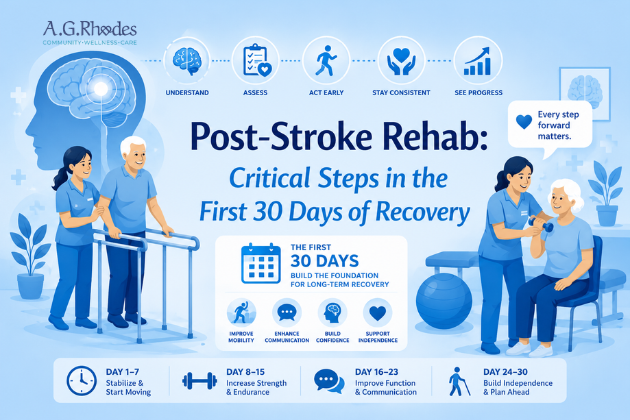
 The first 30 days after a stroke are critical for rebuilding strength, mobility, communication, and independence. Early rehabilitation can significantly improve long-term outcomes by helping patients regain lost functions and reduce complications. A structured post-stroke rehab plan that includes physical therapy, occupational therapy, speech therapy, nutrition, emotional support, and caregiver involvement gives stroke survivors the best chance at recovery and improved quality of life.
The first month after a stroke is the most important phase for neurological recovery. During these 30 days, patients benefit most from early rehabilitation, including physical, occupational, and speech therapy, alongside medical monitoring, emotional support, and caregiver education. Consistent therapy and a personalized recovery plan can help improve mobility, communication, daily functioning, and overall independence.
Why the First 30 Days After a Stroke Matter
The brain has its highest level of neuroplasticity — the ability to reorganize and form new neural connections — during the early stages of recovery. This makes the first 30 days especially important for regaining lost abilities and preventing long-term disability.
Key goals during early stroke rehabilitation include:
- Restoring movement and mobility
- Preventing complications like falls or muscle contractures
- Relearning daily activities
- Improving speech and swallowing
- Supporting emotional and cognitive health
- Reducing the risk of another stroke
Patients who begin rehab early often experience:
- Faster functional recovery
- Shorter hospital stays
- Greater long-term independence
- Lower rates of rehospitalization
Week-by-Week Recovery Timeline After a Stroke
Days 1–7: Stabilization and Early Assessment
The first week focuses on medical stabilization and identifying the patient’s rehabilitation needs.
During this phase, care teams typically:
- Monitor blood pressure and neurological status
- Prevent secondary complications
- Evaluate mobility and muscle strength
- Assess speech, cognition, and swallowing
- Begin gentle movement exercises
Early rehab interventions may include:
Physical Therapy
Physical therapists help patients begin safe movement as soon as medically possible.
Common exercises include:
- Bed mobility training
- Assisted standing
- Balance exercises
- Range-of-motion activities
Speech Therapy
Speech-language pathologists evaluate:
- Speech clarity
- Language comprehension
- Swallowing safety
- Cognitive communication skills
Occupational Therapy
Occupational therapists assess the patient’s ability to:
- Dress independently
- Use the bathroom safely
- Feed themselves
- Perform grooming tasks
Research shows that even small amounts of movement within the first 24–48 hours — when medically appropriate — may improve long-term recovery outcomes.
Days 8–14: Building Strength and Routine
During the second week, therapy intensity often increases. Patients begin developing consistent routines that support recovery and independence.
Common rehab priorities include:
- Improving walking ability
- Strengthening affected limbs
- Practicing daily activities
- Enhancing speech and communication
- Managing fatigue and frustration
Stroke survivors often experience:
- Muscle weakness on one side
- Difficulty with coordination
- Memory or attention problems
- Emotional changes such as anxiety or depression
Caregiver involvement becomes essential.
Family members can help by:
- Attending therapy sessions
- Learning safe transfer techniques
- Encouraging therapy participation
- Monitoring medications and appointments
Days 15–21: Regaining Daily Independence
By the third week, many patients transition into more active rehabilitation programs, including inpatient rehab or skilled nursing rehabilitation settings.
Focus areas during this phase include:
Mobility Training
Patients may practice:
- Walking longer distances
- Climbing stairs
- Using assistive devices safely
Activities of Daily Living (ADLs)
Occupational therapy targets real-world tasks such as:
- Bathing
- Meal preparation
- Getting in and out of bed
- Managing household routines
Cognitive Rehabilitation
Stroke recovery also involves rebuilding cognitive skills.
Therapists may work on:
- Problem-solving
- Attention span
- Memory exercises
- Visual-spatial awareness
Emotional Recovery
Depression after stroke is common but often underrecognized.
Warning signs may include:
- Withdrawal from activities
- Irritability
- Persistent sadness
- Loss of motivation
Early emotional support can improve both mental health and physical recovery outcomes.
Days 22–30: Preparing for Long-Term Recovery
The fourth week is often focused on creating sustainable recovery habits and preparing for discharge or continued outpatient therapy.
Important next steps include:
- Developing a home exercise plan
- Scheduling follow-up appointments
- Modifying the home for safety
- Preventing future strokes
- Setting realistic recovery goals
Home safety modifications may include:
| Safety Modification | Purpose |
| Grab bars in bathrooms | Reduce fall risk |
| Non-slip flooring | Improve walking safety |
| Shower chairs | Support bathing independence |
| Improved lighting | Reduce navigation hazards |
| Handrails on stairs | Improve stability |
The Core Components of Effective Post-Stroke Rehab
1. Physical Therapy
Physical therapy helps restore:
- Strength
- Coordination
- Balance
- Mobility
Patients often work on repetitive movement exercises that retrain the brain and muscles.
2. Occupational Therapy
Occupational therapy focuses on helping patients regain independence in everyday tasks.
OT commonly addresses:
- Fine motor skills
- Adaptive equipment use
- Home safety
- Energy conservation techniques
3. Speech and Language Therapy
Speech therapy supports patients experiencing:
- Aphasia
- Slurred speech
- Swallowing difficulties
- Cognitive communication problems
Swallowing therapy is one of the most important early stroke interventions because swallowing difficulties can increase the risk of pneumonia and malnutrition.
4. Nutritional Support
Stroke recovery requires proper nutrition to support brain healing and muscle recovery.
Recommended nutrition strategies include:
- High-protein meals
- Adequate hydration
- Reduced sodium intake
- Heart-healthy foods
- Texture-modified diets when needed
5. Emotional and Social Support
Recovery is not only physical. Emotional health strongly affects motivation, participation, and outcomes.
Support systems may include:
- Counseling
- Stroke support groups
- Social work services
- Family education
Comparing Rehabilitation Settings After a Stroke
| Rehab Setting | Best For | Therapy Intensity | Typical Length |
| Acute Inpatient Rehab | Patients needing intensive therapy | High | 2–6 weeks |
| Skilled Nursing Rehab | Patients needing medical supervision | Moderate | Several weeks to months |
| Outpatient Therapy | Stable patients living at home | Flexible | Ongoing |
| Home Health Therapy | Homebound patients | Moderate | Short-term |
Warning Signs That Require Immediate Medical Attention
During stroke recovery, patients should seek urgent medical care if they experience:
- Sudden weakness or numbness
- New speech difficulties
- Severe headache
- Chest pain
- Shortness of breath
- Confusion or loss of consciousness
These symptoms may indicate another stroke or medical emergency.
How A.G. Rhodes Supports Stroke Recovery
At A.G. Rhodes, post-stroke rehabilitation focuses on personalized recovery plans designed to help patients regain independence safely and confidently.
A.G. Rhodes Rehabilitation Services may include:
- Physical therapy
- Occupational therapy
- Speech-language pathology
- Skilled nursing care
- Nutritional support
- Transitional care planning
Why families choose A.G. Rhodes:
- Experienced interdisciplinary rehab teams
- Patient-centered recovery programs
- Compassionate skilled nursing care
- Focus on restoring quality of life
Start Your Recovery Journey
If your loved one is recovering from a stroke, early rehabilitation can make a meaningful difference. Contact A.G. Rhodes to learn more about short-term rehabilitation and recovery support services.
Frequently Asked Questions (FAQ)
How soon should stroke rehabilitation begin?
Stroke rehabilitation should begin as early as medically possible, often within 24–48 hours after stabilization.
What are the most important therapies after a stroke?
This will depend on the patient’s symptoms and recovery goals, but physical, occupational, and speech therapy all play critical roles in recovery after a stroke.
Can stroke patients fully recover?
Some stroke survivors recover fully, while others may experience long-term challenges; early rehabilitation improves the likelihood of better outcomes.
How long does post-stroke rehabilitation last?
Recovery timelines vary widely, but rehabilitation may continue for weeks, months, or longer depending on stroke severity.
What should caregivers focus on during stroke recovery?
Caregivers should prioritize safety, therapy participation, medication management, emotional support, and follow-up care.