

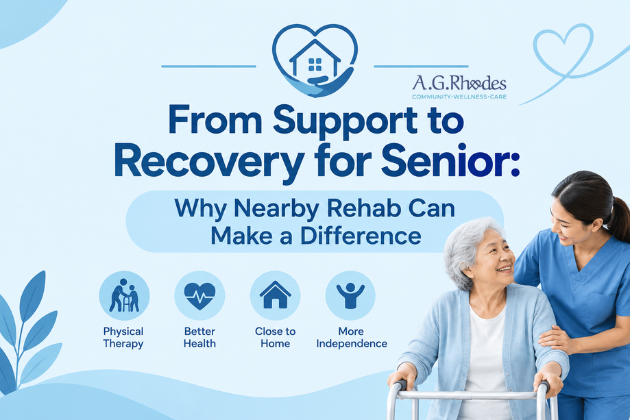
 When an older adult needs rehabilitation after an illness, injury, surgery, or hospitalization, choosing the right rehabilitation facility is an important decision. While clinical expertise and quality of care should remain top priorities, location can also play a meaningful role in the rehabilitation experience.
A rehabilitation center located near family can make it easier for loved ones to remain involved throughout recovery. Frequent visits can provide encouragement, emotional support, and a familiar connection during a period that may otherwise feel overwhelming or uncertain.
At A.G. Rhodes, we understand that rehabilitation involves more than physical recovery. We support older adults as they work toward greater independence while helping families remain connected throughout the care journey.
Why Choosing a Rehab Facility Near Family Matters
Recovery can require patience. An older adult may spend days or weeks working with nurses, therapists, physicians, and other care professionals. During this time, having familiar faces nearby can provide an important source of comfort.
A rehabilitation facility close to home can make family involvement more practical. Shorter travel times may allow relatives to visit more regularly rather than limiting visits to occasional weekends or special occasions.
For older adults, these connections can help maintain a sense of familiarity and continuity during a major transition.
Family members can also gain a better understanding of the rehabilitation process when they are able to participate more consistently.
How Family Visits Can Support Rehabilitation
Rehabilitation requires active participation. Depending on the individual’s condition and treatment plan, therapy may involve exercises, mobility training, strengthening activities, balance work, daily living skills, or other interventions.
These activities can sometimes be challenging.
Encouragement from family members can provide emotional support when rehabilitation feels difficult.
A familiar voice can remind an older adult of the progress already made. A visit can provide motivation after a demanding therapy session. Family members may also celebrate milestones, such as taking the first steps after surgery, transferring independently, completing an exercise, or becoming more confident with everyday activities.
These moments may appear small, but they can represent meaningful progress to someone recovering from a significant health event.
The Connection Between Proximity and Family Involvement
Distance can create practical barriers.
If a rehabilitation facility is far from a person’s home, family members may have difficulty visiting frequently because of work schedules, transportation, childcare responsibilities, or other commitments.
A rehab facility near family can reduce some of these logistical challenges.
When travel is easier, families may have more opportunities to:
- Visit their loved one regularly
- Participate in care discussions
- Communicate with members of the rehabilitation team
- Observe progress over time
- Provide emotional encouragement
- Celebrate recovery milestones
- Learn how to support the transition home
- Become familiar with recommended exercises and routines
- Prepare the home environment for a safe return
Regular family involvement can create a stronger connection between the rehabilitation team, the patient, and the people who will continue supporting the individual after discharge.
Rehabilitation Is About More Than Physical Recovery
When people hear the word “rehabilitation,” they often think about physical therapy. Physical recovery is certainly an important component, but successful rehabilitation can involve many dimensions of an older adult’s well-being.
A person recovering from hospitalization may experience uncertainty, frustration, fatigue, or anxiety about returning home.
For this reason, rehabilitation should address the whole person.
Depending on individual needs, a rehabilitation program may involve physical therapy, occupational therapy, nursing care, medical oversight, and other supportive services.
The goal is often to help the individual regain functional abilities and confidence while preparing for the next stage of care.
How Nearby Senior Rehabilitation Can Support Emotional Well-Being
A familiar support system can be particularly valuable when an older adult is away from home.
Being in a rehabilitation setting can involve a significant change in routine. Family members can help preserve a sense of normalcy through regular conversation, shared meals when appropriate, photographs, familiar music, stories, or simply spending time together.
Regular visits may also help families recognize changes in mood or concerns that their loved one wants to communicate.
Emotional support does not replace professional rehabilitation, but it can complement the clinical care an older adult receives.
The combination of skilled care and meaningful family connection can create a more supportive recovery environment.
Nearby Senior Rehab Can Make Communication Easier
Family involvement can also improve communication.
When relatives can visit more easily, they may have more opportunities to speak with nurses, therapists, and other members of the care team. These conversations can help families understand rehabilitation goals and learn what their loved one may need after discharge.
Clear communication is especially important when the individual is preparing to return home.
Families may need to understand:
- Mobility limitations
- Recommended exercises
- Medication routines
- Fall-prevention strategies
- Assistive equipment
- Follow-up appointments
- Changes to daily routines
- Home safety considerations
- Ongoing care requirements
A rehabilitation team can help families prepare for these responsibilities and understand how they can support continued recovery.
The Importance of Location When Choosing a Rehabilitation Facility
Location should not be the only factor families consider when selecting rehabilitation care. However, it is an important practical consideration.
A convenient location can make family participation easier without requiring relatives to spend hours traveling for every visit.
When comparing rehab facilities near home, families should consider both convenience and quality.
Important questions include:
What rehabilitation services are available?
Families should determine whether the facility provides the therapies and clinical services appropriate for their loved one’s needs.
How individualized is the care plan?
Every older adult enters rehabilitation with different abilities, health conditions, goals, and circumstances. Rehabilitation should be tailored to the individual.
How does the facility involve families?
Ask how families communicate with the care team and whether they are included in discussions about progress and discharge planning.
What is the facility’s approach to quality of life?
Recovery should address more than physical function. Social interaction, emotional well-being, dignity, and meaningful engagement also matter.
How convenient is the location?
Consider driving time, accessibility, parking, traffic, and whether family members can realistically visit as often as they would like.
Rehabilitation Near Grant Park, Decatur, and Marietta
For families searching for rehab near me, proximity can be especially important when regular visits are part of the recovery plan.
A.G. Rhodes provides senior care services in the Atlanta area, including locations serving the Grant Park and Marietta communities, and one near Decatur and Emory University.
Having rehabilitation options in accessible locations can help families remain connected while their loved one receives professional care.
For an older adult, knowing that family can visit regularly may provide reassurance during an unfamiliar experience.
For families, a nearby senior rehab facility can make it easier to remain present without turning every visit into a major travel commitment.
Preparing for a Successful Rehabilitation Stay
Families can take several steps to make a rehabilitation stay more productive.
Learn About the Rehabilitation Goals
Ask the care team what the primary goals are and how progress will be measured.
Goals may involve improving mobility, strength, balance, endurance, or the ability to perform everyday activities.
Stay Encouraging
Recovery may not always happen at the same pace. Encouragement can help an older adult remain focused on progress rather than becoming discouraged by temporary setbacks.
Participate in Care Discussions
Family members can provide useful information about the older adult’s normal routines, abilities, preferences, and home environment.
Prepare for the Transition Home
Discharge planning should begin well before the actual discharge date. Families may need to make changes to the home, arrange follow-up care, obtain equipment, or modify daily routines.
Celebrate Progress
Recovery milestones deserve recognition. Celebrating improvements can reinforce a sense of accomplishment and help maintain motivation.
Short-Term Rehabilitation and the Goal of Returning Home
For many older adults, short-term rehabilitation is a bridge between hospitalization and returning home.
The objective is often to help the individual regain enough strength and functional ability to safely transition to the next setting.
This transition can require careful planning.
A rehabilitation team may work with the patient and family to identify remaining challenges and determine what support will be needed after discharge.
Family members can play an important role because they understand the individual’s home environment and daily routines.
A nearby rehabilitation facility can make this collaboration easier by allowing relatives to remain engaged throughout the process.
Why Family Presence Can Make Recovery Feel Less Isolating
Illness and hospitalization can sometimes leave older adults feeling disconnected from their normal lives.
Rehabilitation provides an opportunity to rebuild strength and independence, but emotional connection remains important.
Regular contact with family can remind older adults that they are supported throughout the recovery process.
A visit does not have to involve a lengthy conversation or elaborate activity. Sometimes simply sitting together, talking about familiar memories, looking through family photos, or sharing an encouraging word can make a meaningful difference in someone’s day.
These interactions can help preserve relationships during a period when routines have changed.
Choosing a Rehab Facility That Supports the Whole Family
The best rehabilitation experience considers both the older adult and the people who support them.
Families should look for a provider that combines appropriate clinical services with compassion, communication, dignity, and individualized attention.
A convenient location can strengthen that experience by making meaningful family involvement more realistic.
When a facility is close enough for regular visits, family members can become an active part of the recovery journey rather than occasional visitors.
A.G. Rhodes: Supporting Seniors From Recovery to Greater Independence
At A.G. Rhodes, we believe every older adult deserves compassionate care that recognizes individual needs and personal dignity.
Our senior care communities provide supportive environments where older adults can receive professional care while maintaining meaningful connections with family and community.
For individuals receiving rehabilitation, our goal is to support recovery and help residents work toward the greatest level of independence possible based on their individual circumstances.
For families, we recognize that choosing rehabilitation can be an emotional decision. Being close to a loved one can provide reassurance, encouragement, and opportunities to remain involved throughout recovery.
If you are searching for short-term rehabilitation near Grant Park, Marietta, Decatur, or the greater Atlanta area, A.G. Rhodes can help you learn more about available care options.
Contact A.G. Rhodes today to learn more about rehabilitation and senior care services and discover how we can support your loved one’s journey from recovery to greater independence.
Take the Next Step Toward Recovery
Choosing rehabilitation is an important step for an older adult and their family. The right care environment can provide professional support while helping the individual work toward greater strength, confidence, and independence.
When rehabilitation is located close to family, staying connected can become easier. Regular visits, communication, encouragement, and participation can help families remain part of the recovery journey.
Contact A.G. Rhodes today to learn more about senior rehabilitation and discover care options designed to support older adults and their families.
Frequently Asked Questions About Nearby Rehabilitation
Why should I choose a rehabilitation facility near my family?
A nearby senior rehabilitation facility can make regular family visits easier and may allow loved ones to remain more involved in the rehabilitation and discharge-planning process.
Does family involvement help during rehabilitation?
Family involvement can provide emotional encouragement and help maintain important relationships. Families can also communicate useful information about the individual’s routines, preferences, and home environment.
What should I look for in a rehab facility near me?
Consider the facility’s rehabilitation services, care team, individualized care plans, communication practices, quality of life programs, safety measures, location, and reputation.
What types of conditions require short-term rehabilitation?
Older adults may need short-term rehabilitation after surgery, injury, illness, hospitalization, or another medical event that temporarily affects strength, mobility, or independence.
What therapies are commonly provided during senior rehabilitation?
Depending on individual needs, rehabilitation may include physical therapy, occupational therapy, and other clinical or supportive services designed to improve functional abilities and independence.
How long does short-term rehabilitation take?
The length of rehabilitation varies according to the individual’s condition, goals, progress, medical needs, and ability to safely transition to the next level of care.
Can family members participate in rehabilitation planning?
Families can often participate in care discussions and discharge planning. The level and type of involvement will depend on the individual’s preferences, circumstances, and care plan.
Why is location important when choosing senior rehabilitation?
Location can affect how easily family members can visit and participate in care. A facility closer to home may reduce travel barriers and make regular involvement more practical.
What is the difference between rehabilitation and long-term nursing care?
Short-term rehabilitation generally focuses on helping an individual recover function following an illness, injury, surgery, or hospitalization. Long-term nursing care provides ongoing support for individuals who require continuing skilled care.
How can families support an older adult during rehabilitation?
Families can provide encouragement, visit regularly, communicate with the care team, participate in care planning, help prepare for discharge, and support recommended routines after returning home.
Where can I find senior rehabilitation near Grant Park, Decatur or Marietta?
A.G. Rhodes offers senior care services in the Atlanta area, including communities serving the Grant Park, Decatur, and Marietta areas. Families can contact A.G. Rhodes to learn more about rehabilitation and available care options.