

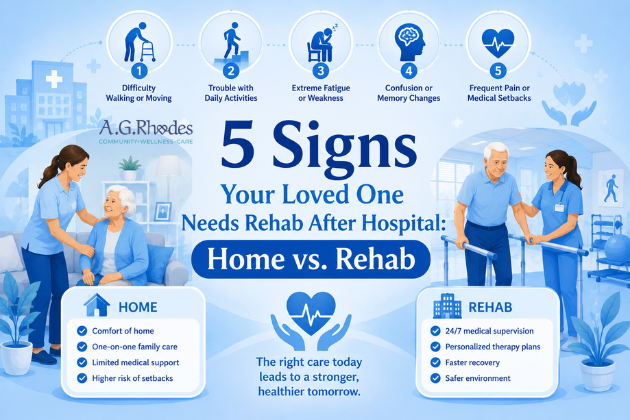
 Not every patient is ready to return home immediately after a hospital stay. Choosing between home and rehab depends on medical stability, mobility, cognitive function, activities of daily living, and caregiver support. Recognizing these warning signs early can improve recovery, reduce hospital readmissions, and help your loved one regain independence safely.
After hospitalization, some patients recover best in a rehabilitation setting instead of returning home immediately. If your loved one struggles with walking, performing daily activities, managing medications, thinking clearly, or requires ongoing skilled medical care, rehabilitation may provide the safest path toward recovery while reducing the risk of complications and readmission.
Why the Decision Between Home vs. Rehab Matters
Hospital discharge doesn’t always mean a patient has fully recovered. Hospitals focus on stabilizing acute medical conditions, while rehabilitation centers help patients regain the strength, mobility, and independence needed to return home safely.
One of the biggest mistakes families make is assuming discharge means their loved one is ready to live independently. In reality, many older adults still require skilled nursing care, physical therapy, occupational therapy, speech therapy, or medical monitoring.
When evaluating home vs. rehab, families should consider more than convenience. The right environment can significantly influence recovery outcomes, long-term independence, and quality of life.
1. They Cannot Perform Daily Activities Independently
One of the clearest indicators that rehabilitation is needed is difficulty performing Activities of Daily Living (ADLs).
Common ADLs include:
- Bathing
- Dressing
- Eating
- Using the bathroom
- Getting in and out of bed
- Walking safely
If assistance is required for several of these activities, returning home may increase the risk of falls, injuries, or another hospitalization.
Rehabilitation programs provide structured therapy to help patients rebuild these essential life skills before transitioning home.
2. Mobility Has Declined Significantly
Many hospital stays result in muscle weakness due to prolonged bed rest.
Warning signs include:
- Difficulty standing
- Unsteady walking
- Frequent loss of balance
- Trouble climbing stairs
- Need for assistance transferring from bed to chair
Physical therapists in rehabilitation centers create individualized recovery plans that improve:
- Strength
- Endurance
- Balance
- Flexibility
- Safe mobility
Early rehabilitation can help prevent long-term disability and restore confidence.
3. They Need Ongoing Skilled Medical Care
Some patients leave the hospital with medical needs that cannot be managed safely at home.
Examples include:
- IV medications
- Wound care
- Post-surgical monitoring
- Complex medication management
- Oxygen therapy
- Cardiac monitoring
Skilled nursing professionals monitor recovery closely and respond quickly if complications arise.
This level of oversight often prevents unnecessary emergency room visits and hospital readmissions.
4. Cognitive Changes Affect Safety
Recovery isn’t only physical.
Many older adults experience temporary or ongoing cognitive challenges after hospitalization, including:
- Confusion
- Memory loss
- Difficulty following instructions
- Poor judgment
- Medication mistakes
- Increased fall risk
These issues may result from surgery, infections, medications, or underlying neurological conditions.
Rehabilitation teams assess cognitive health alongside physical recovery, helping patients regain independence while ensuring safety.
5. Family Caregivers Cannot Meet Recovery Needs
Family members often want to provide care themselves, but complex recovery needs can quickly become overwhelming.
Ask yourself:
- Can someone provide 24-hour supervision?
- Is the home accessible?
- Can medications be managed correctly?
- Is transportation available for therapy appointments?
- Can lifting or transfers be performed safely?
If the answer to several of these questions is no, rehabilitation may be the safer option.
A short rehabilitation stay often equips patients to return home with greater independence while reducing caregiver stress.
Home vs. Rehab: Key Differences
| Factor | Home Care | Rehabilitation Center |
| Skilled Nursing | Limited | Available 24/7 |
| Physical Therapy | Scheduled visits | Intensive therapy daily or multiple times a week |
| Occupational Therapy | Limited frequency | Comprehensive treatment |
| Medical Monitoring | Minimal | Continuous |
| Fall Prevention | Depends on home | Specialized environment |
| Recovery Speed | Varies | Often accelerated through structured care |
| Caregiver Burden | High | Lower |
Additional Factors Physicians Consider Before Recommending Rehab
Healthcare providers evaluate several factors before discharge:
- Overall medical stability
- Ability to walk safely
- Cognitive function
- Nutrition and hydration
- Pain management
- Medication complexity
- Home environment
- Availability of caregivers
- Risk of hospital readmission
A comprehensive rehabilitation assessment ensures patients receive care matched to their recovery needs rather than making discharge decisions based solely on hospital length of stay.
Benefits of Choosing Rehabilitation
Patients who participate in post-hospital rehabilitation often experience:
- Faster functional recovery
- Improved mobility
- Better medication management
- Reduced fall risk
- Lower hospital readmission rates
- Increased confidence
- Greater independence
- Improved quality of life
Rehabilitation is not about delaying a return home—it is about preparing patients to return home safely and successfully.
How A.G. Rhodes Supports Recovery
A.G. Rhodes provides compassionate, person-centered rehabilitation designed to help older adults recover after hospitalization.
Patients benefit from:
- Individualized rehabilitation plans
- Physical, occupational, and speech therapy
- Skilled nursing care
- Physician oversight
- Modern rehabilitation equipment
- Comfortable healing environments
- Family involvement throughout recovery
Every recovery journey is different, and A.G. Rhodes works closely with patients and families to develop personalized care plans that support long-term success.
When to Choose Home vs. Rehab
The decision between home vs. rehab should focus on safety, recovery potential, and long-term independence—not simply convenience.
If your loved one cannot safely perform daily activities, requires ongoing medical care, or lacks adequate support at home, rehabilitation may offer the strongest foundation for a successful recovery.
Early rehabilitation often helps patients regain independence sooner while providing families with greater peace of mind.
Ready to Help Your Loved One Recover Safely?
If someone you love is preparing for hospital discharge, don’t face the decision alone.
Contact A.G. Rhodes to learn how expert rehabilitation services can help patients regain strength, restore independence, and transition home with confidence. Schedule an assessment today to determine the most appropriate level of post-hospital care.
Frequently Asked Questions
Does every hospital patient need rehabilitation?
No. Rehabilitation is recommended only when patients require additional therapy, skilled nursing, or medical supervision before returning home.
Patients who cannot safely recover at home may benefit from rehabilitation.
How long does rehabilitation usually last?
The length of stay depends on the patient’s condition, recovery progress, and physician recommendations.
Most rehabilitation stays range from one to several weeks.
Can someone go home after rehabilitation?
Yes.
The primary goal of rehabilitation is helping patients safely return home whenever possible.
Does Medicare cover rehabilitation?
Many rehabilitation services may be covered if eligibility requirements are met.
Coverage depends on the patient’s Medicare plan, physician recommendations, and qualifying medical criteria.
What therapies are offered during rehabilitation?
Rehabilitation programs commonly include physical, occupational, and speech therapy.
Therapy plans are customized based on each patient’s medical condition and recovery goals.