

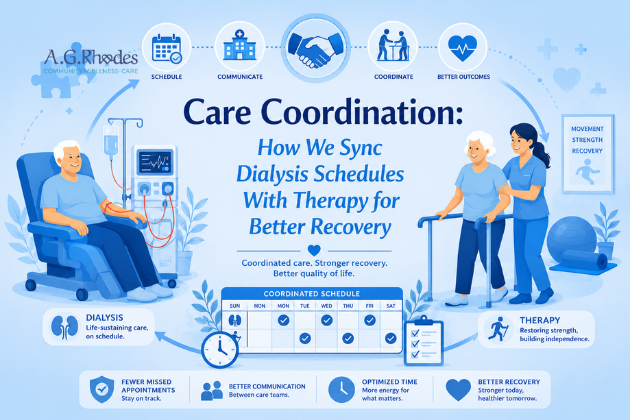
 Coordinating dialysis and rehabilitation therapy is essential for patient safety, energy management, and recovery outcomes. Skilled nursing and rehab teams work together to align dialysis appointments, physical therapy, occupational therapy, meals, medications, transportation, and rest periods so patients can continue building strength without missing critical kidney treatments. Effective care coordination reduces hospital readmissions, improves therapy participation, and supports a smoother recovery journey.
Patients receiving dialysis while recovering in rehabilitation require carefully coordinated care plans. Rehab centers synchronize dialysis appointments with physical, occupational, and speech therapy schedules to reduce fatigue, prevent missed treatments, improve participation in therapy, and support safer recovery after illness, surgery, stroke, or hospitalization.
Why Dialysis Coordination Matters in Rehabilitation
For patients with kidney disease, dialysis treatments are non-negotiable. At the same time, rehabilitation therapy is critical for regaining strength, mobility, balance, and independence after a hospitalization or medical event.
Without proper scheduling coordination, patients can experience:
- Severe fatigue during therapy sessions
- Missed rehabilitation opportunities
- Increased risk of falls
- Medication timing conflicts
- Nutritional challenges
- Reduced recovery progress
This is why integrated care coordination is one of the most important services in post-acute rehabilitation settings.
At A.G. Rhodes, interdisciplinary teams work together to create individualized schedules that prioritize both medical stability and rehabilitation progress.
How Dialysis and Therapy Scheduling Works
Coordinated Treatment Planning
The process begins with a collaborative assessment involving:
- Nephrologists
- Nurses
- Rehabilitation therapists
- Social workers
- Dietitians
- Transportation coordinators
- Case managers
The care team evaluates:
- Dialysis frequency and duration
- Therapy tolerance
- Energy levels throughout the day
- Medication timing
- Fluid restrictions
- Transportation logistics
- Recovery goals
This coordinated approach helps reduce scheduling conflicts while improving patient participation in therapy.
The Biggest Challenge: Managing Fatigue
One of the most overlooked recovery barriers for dialysis patients is post-dialysis fatigue.
Many patients experience:
- Weakness
- Dizziness
- Muscle cramping
- Blood pressure fluctuations
- Cognitive fog
- Reduced endurance
Therapy sessions scheduled immediately after dialysis may be less effective. High-performing rehabilitation teams therefore structure therapy around a patient’s peak energy periods.
Common Scheduling Strategies
| Scheduling Strategy | Purpose | Patient Benefit |
| Morning therapy before dialysis | Maximizes energy levels | Better participation |
| Light therapy after dialysis | Prevents overexertion | Improved safety |
| Rest periods between appointments | Reduces exhaustion | Better recovery tolerance |
| Shorter therapy blocks | Improves endurance | Increased consistency |
| Flexible weekly schedules | Adapts to changing health | Fewer missed sessions |
This individualized scheduling is especially important for older adults recovering from stroke, surgery, cardiac events, or prolonged hospitalization.
Therapy Adjustments for Dialysis Patients
Physical Therapy Coordination
Physical therapists modify rehabilitation programs based on:
- Blood pressure stability
- Muscle weakness
- Balance limitations
- Cardiovascular endurance
- Fluid retention
Exercises are often paced differently on dialysis days versus non-dialysis days.
Occupational Therapy Coordination
Occupational therapists help patients regain independence with:
- Dressing
- Bathing
- Transfers
- Energy conservation
- Adaptive equipment use
For dialysis patients, therapists may also teach:
- Fatigue management techniques
- Safe mobility after treatment
- Home safety strategies
Speech Therapy Coordination
Patients recovering from stroke or neurological conditions may also receive speech therapy while undergoing dialysis.
Scheduling coordination ensures:
- Cognitive therapy occurs during alert periods
- Meals align with swallowing precautions
- Medication timing supports therapy performance
Onsite Dialysis Enhances Continuity of Care
Coordinating dialysis treatments during rehabilitation can be challenging, especially when transportation and scheduling disruptions occur. That is why onsite dialysis services can provide a significant advantage for patients recovering in a skilled nursing and rehabilitation setting.
At A.G. Rhodes, onsite dialysis is available at two locations — A.G. Rhodes Atlanta and A.G. Rhodes DeKalb (formerly A.G. Rhodes Wesley Woods) — helping patients receive essential dialysis treatments without leaving the campus.
This added convenience helps:
- Reduce travel-related stress and delays
- Minimize interruptions to rehabilitation therapy schedules
- Improve comfort and safety for patients with mobility challenges
- Support better continuity of care between dialysis and therapy teams
- Provide greater flexibility when adjusting therapy sessions around treatment times
By offering onsite dialysis services, rehabilitation teams can more efficiently coordinate care while helping patients stay focused on recovery and maintaining consistent treatment schedules.
Nutrition and Medication Timing
Dialysis patients frequently follow strict:
- Fluid restrictions
- Sodium limitations
- Potassium monitoring
- Protein intake requirements
Therapy participation can be heavily influenced by meal timing and medication management.
Coordinated Care Teams Monitor:
- Blood sugar levels
- Blood pressure medications
- Pain management
- Hydration status
- Appetite changes
- Weight fluctuations
For example, some blood pressure medications may be adjusted before therapy or dialysis to reduce dizziness and fall risk.
This level of coordination helps create safer rehabilitation experiences.
The Role of Interdisciplinary Communication
One major difference between standard care and high-quality post-acute rehabilitation is interdisciplinary communication.
Effective care coordination includes:
- Daily nursing updates
- Shared therapy documentation
- Dialysis treatment reporting
- Physician oversight
- Family communication
- Discharge planning meetings
When communication gaps occur, patients are more likely to experience:
- Missed appointments
- Therapy setbacks
- Medication errors
- Preventable hospital readmissions
Integrated care teams help reduce these risks through proactive planning.
Unique Recovery Challenges Dialysis Patients Face
Patients receiving dialysis often recover more slowly than other rehabilitation patients due to:
- Chronic inflammation
- Muscle loss
- Cardiovascular strain
- Multiple chronic conditions
- Frequent medical appointments
- Reduced stamina
This means rehabilitation programs must balance intensity with safety.
Signs a Schedule Needs Adjustment
Care teams continuously monitor for:
- Excessive fatigue
- Missed therapy participation
- Blood pressure instability
- Shortness of breath
- Increased confusion
- Reduced appetite
- Fall risk changes
Personalized scheduling is not static — it evolves throughout recovery.
Benefits of Coordinated Dialysis and Rehabilitation Care
When therapy and dialysis schedules are synchronized effectively, patients may experience:
Improved Rehabilitation Outcomes
- Better therapy participation
- Increased strength and endurance
- Faster functional recovery
Reduced Hospital Readmissions
- Improved medication adherence
- Better symptom monitoring
- Earlier complication detection
Better Quality of Life
- Reduced stress
- Greater independence
- Improved confidence during recovery
Safer Transitions Home
- Coordinated discharge planning
- Family caregiver education
- Home safety recommendations
What Families Should Ask a Rehabilitation Center
Families evaluating a rehabilitation facility should ask:
- How does A.G. Rhodes help residents avoid transportation coordination challenges for dialysis and therapy schedules through its onsite dialysis clinics?
- Are therapists experienced with dialysis-related fatigue?
- How often do care teams communicate about schedule changes?
- Can therapy schedules be adjusted around medical treatments?
- How do you reduce missed therapy sessions?
These questions help families identify rehabilitation providers experienced in complex medical coordination.
Why Personalized Care Coordination Matters
No two dialysis patients recover the same way.
Some patients tolerate intensive therapy well, while others need:
- Shorter sessions
- More rest breaks
- Flexible scheduling
- Modified exercise programs
Personalized rehabilitation planning helps patients continue making progress without compromising safety or medical stability.
At A.G. Rhodes, care teams focus on individualized recovery plans designed to support the medical, physical, and emotional needs of every patient.
How A.G. Rhodes Supports Dialysis Patients in Rehabilitation
A.G. Rhodes provides coordinated post-acute rehabilitation services designed to support medically complex patients, including those requiring dialysis.
Key areas of focus include:
- Interdisciplinary care planning
- Flexible therapy scheduling
- Skilled nursing oversight
- Transportation coordination
- Fall prevention strategies
- Patient and family communication
- Personalized discharge planning
The goal is to help patients recover safely while maintaining continuity of essential kidney care.
Conclusion
Successful rehabilitation for dialysis patients requires more than simply managing appointments. It depends on seamless coordination between skilled nursing care, therapy services, and dialysis treatment to support safe and effective recovery.
A.G. Rhodes provides an ideal solution for individuals who require dialysis during rehabilitation because we offer onsite dialysis clinics at select locations. By eliminating the challenges of arranging outside transportation for dialysis appointments, residents can focus more fully on recovery, maintain consistent treatment schedules, and experience less stress and disruption throughout the rehabilitation process.
With coordinated post-acute care, individualized recovery planning, and convenient onsite dialysis services, A.G. Rhodes helps patients rebuild strength, improve independence, and transition more confidently toward their next stage of care. To learn more about rehabilitation and skilled nursing services at A.G. Rhodes, contact our care team to discuss personalized recovery planning and coordinated care support.
Frequently Asked Questions
How do rehab centers coordinate dialysis and therapy?
Rehab centers coordinate dialysis and therapy through interdisciplinary scheduling, transportation planning, and individualized care plans.
Can patients receive physical therapy on dialysis days?
Yes, many patients receive modified physical therapy on dialysis days depending on their energy levels and medical stability.
Why are dialysis patients often tired after therapy?
Dialysis can cause fatigue, blood pressure changes, and muscle weakness that affect endurance during rehabilitation.
What makes A.G. Rhodes a better solution for dialysis patients during rehabilitation?
A.G. Rhodes helps eliminate many of the transportation challenges commonly associated with dialysis care by offering onsite dialysis clinics at select locations. This allows residents to receive dialysis treatments without the stress and delays of off-site transportation, helping maintain consistent care schedules, reduce disruptions to therapy, and support a smoother rehabilitation experience.
Does coordinated care improve rehabilitation outcomes?
Yes, coordinated care can improve therapy participation, reduce complications, and support safer recovery transitions.